
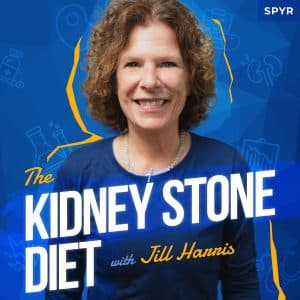
Kathleen asks whether her daily hibiscus tea—which she drinks to help manage blood pressure—could be putting her at risk for kidney stones. Jill breaks down what really matters with any tea: how much you’re drinking, how long you steep it, and why oxalate levels can climb the longer a tea bag sits in hot water. She also shares a simple way to test any food or drink against your own 24-hour urine collection to see its real effect on your oxalate levels.
Chapters
00:00 Introduction to Kidney Stone Diet Podcast
01:26 Exploring Hibiscus Tea and Kidney Health
04:18 Managing Blood Pressure with Hibiscus Tea
Transcript
Jeff Sarris (00:00)
Is this healthy drink good for kidney stone formers? Let’s talk about that.
today we have a question from Kathleen. If you’re out there with a question, you can go to call.show/kidneystonediet or click the link in the description and leave us a message. But let’s jump right over to Kathleen’s question.
Jill Harris (00:08)
Okay.
It’s a bottle.
Well that should be gone through some
Isn’t that so nice, Jeff? Thank you, Kathleen. It’s a very nice thing to say, and we appreciate that. We try our best over here. Okay, so you know, in all my years, Kathleen, I’ll tell you what, no one’s ever asked me specifically about
Jeff Sarris (01:12)
Uh-huh.
Jill Harris (01:26)
Hibiscus tea. So I love that you ask about it. Something different for us. So is it high in oxalate? I don’t see anything that says it’s high in oxalate and certainly not going to damage your kidneys. But before I made just a general statement like that, you know, I’m a pain in the tush, Kathleen. I would say, well, if you and I were talking together, I’d say, Well, girlfriend, how much are you drinking a day? Because people will say, Well, I drink it every day. Okay. but
You’d be surprised what some people do, Kathleen. They’re drinking 20 cups a day. So you said you had high blood pressure, and there is some science that will say that if you have, you know, slightly higher, it’s not if you have super high blood pressure, but if you’re trying to manage your blood pressure and, you know, trying not to go on a pill or whatever, first of all, stress, number one, obviously. good diet, low salt, all the things. But hibiscus tea has a little bit of science around it that says that it could.
Help lower, you know, high blood pressure that isn’t too high. It’s not taking it from heart attack high all the way down, but a little hibiscus tea is not going to hurt you, and it’s certainly not going to damage your kidneys. But as always, I’d be like, how many glasses a day are you drinking as far as the oxalate component of it? So it I haven’t seen it be listed as high oxalate anywhere. So my general recommendation for all teas are
Couple of cups a day. Do not steep it all day long. There’s a lot of people that I’ve talked to in the past that they’re like, Jill, I was having 20 cups of tea a day, and each one I had cups all over my house, and those tea bags were in the that cup of tea for like eight hours. I mean, steepin’, steeping, steepin’. So the longer you steep your tea, the higher oxalate it will be. But
I’m not worried about it if you’re just having a truck a true couple cups of it. And remember what a cup of beverage is, eight ounces. You know, if you go to Starbucks, you’ll say get a cup of coffee and it’s 24 ounces. You’re trying to carry it out of there with a friend. It’s so big. So a couple cups of tea every day. I actually have mint tea every day for my stomach in the morning and at night, and it’s become a nice little habit for me, but I only steep it for a couple minutes and
Just enjoy it even in the summer. So I don’t have any problem with you having hibiscus tea. I’m glad it’s helping you manage your blood pressure. And you know, I it’s definitely not gonna damage your kidneys. You’re in no fear of that. I’m interested in why you asked that. You can write a comment too under this video and tell me what you were thinking when you asked that, so I could have more information. And also if you can put in the comment how many you’re drinking every day.
And if you’re drinking a normal amount of tea, a couple cups a day and you’re getting your calcium needs met every day, it should not be high oxalate at all. And as I’m going to remind you or anybody listening, if you’re worried about something that you’re doing on a daily basis, like Kathleen’s doing this tea, when you do your next 24-hour urine collection, you can check, have that food or drink that you’re worried about.
Have it the day of the collection and see what it’s doing to your oxalate level. Is it causing it to be higher than the last urine collection you did without that product? Then you can see what’s going on. That is always the safe bet. But a couple cups of hibiscus tea, my friend, please enjoy it. And I’m glad you’re trying to manage your blood pressure before you have to go on pills. So good for you. And I’m thrilled to hear from you. Thanks for calling.
Jeff Sarris (05:12)
Yeah. Thanks again for the call, Kathleen. And if you have a question, again, you can go to the link in the description or go to call.show/kidneystonediet And if you’re ready to dive into everything Kidney Stone Diet you can find everything at kidneystonediet.com where you can work directly with Jill for private consultations. You can find the all access pass, which includes the Kidney Stone Diet meal plans and the kidney stone prevention course and absolutely everything that Jill has ever created in a self-serve format.
But I think with that we’ll wrap. Thanks again for tuning in and we’ll see you next week.
Jill Harris (05:46)
Bye, everybody. Thank you, Kathleen.








Leave a Reply