Kidney Stone Diet

Kidney Stone Diet

®

with Jill Harris, LPN, CHC


  • Start Here
  • Start Here
  • MY PREVENTION TOOLS
    • All-Access Pass
      • Daily Meal Plans
      • Group Coaching
      • Prevention Course
      • Cookbooks
    • Private Consultations
  • Patient Reviews
  • Resources
    • Email Newsletter
    • Oxalate Food List
    • Protein Calculator
    • Blog
    • Podcast
    • Low Oxalate Recipes
    • About Jill Harris
    • FAQ
  • Help Desk
Login
Home » Blog » Will My Kidney Stone Pass?

Will My Kidney Stone Pass?

Jill Harris, LPN, CHC Avatar

Written by

Jill Harris, LPN, CHC

Updated

February 12, 2026

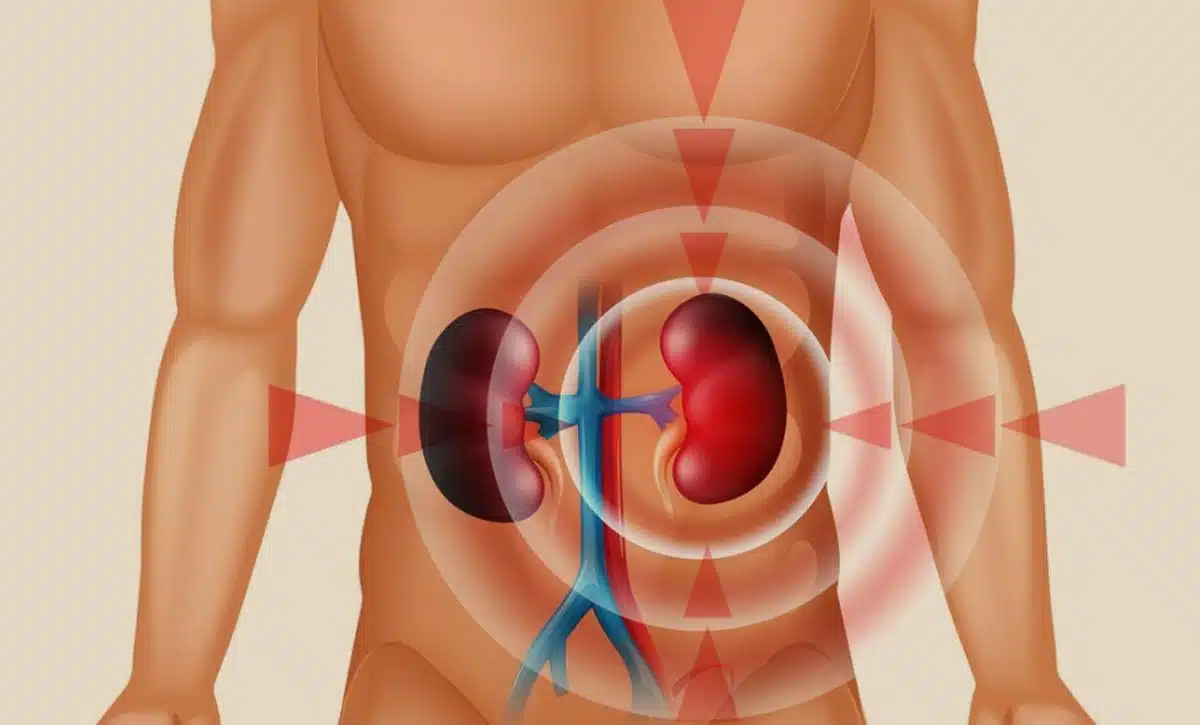
If you’ve ever been told you have a kidney stone, you probably asked the same question everyone asks: “Will it pass on its own?” The honest answer is that it depends. Most people know stone size matters, but fewer realize that kidney stone location can be just as important. Where a stone sits plays a major role in whether it passes naturally or requires treatment.

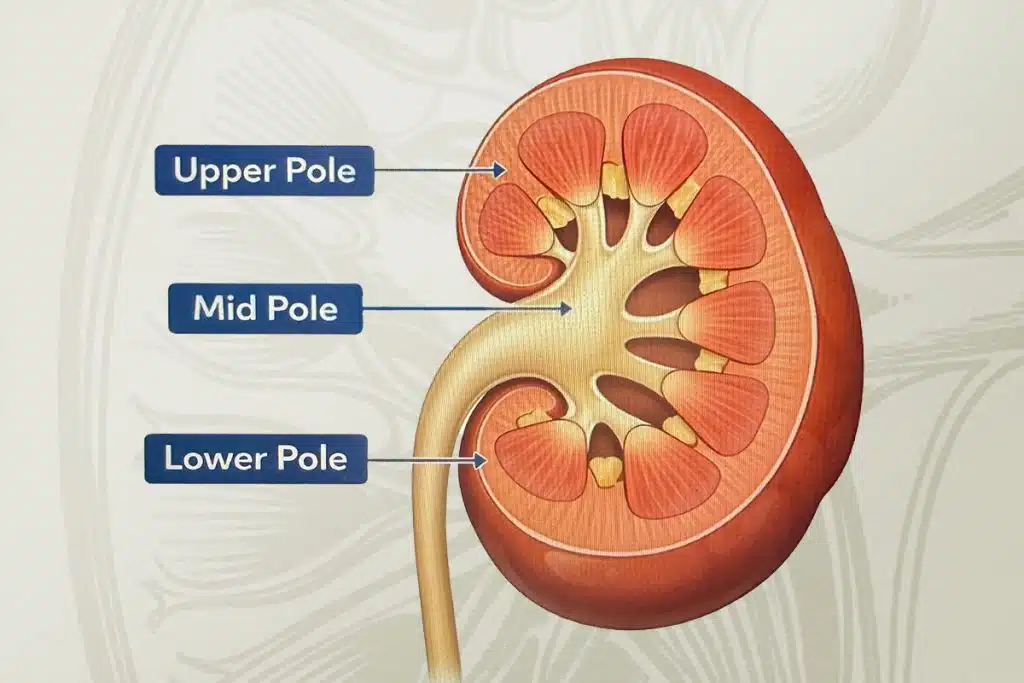
Kidney stones form inside the kidney and often do not cause symptoms until they begin to move. Doctors usually describe stones by their location within the kidney, using the terms upper, mid, and lower pole.

What “Upper Pole” and “Lower Pole” Actually Mean

The word “pole” simply refers to position within the kidney. The kidney is bean-shaped, so doctors describe it by its top and bottom ends, much as we talk about the North and South Poles. The upper pole is the top of the kidney near the ribs. The lower pole is the bottom of the kidney near the pelvis. The mid pole sits between the two. When a doctor says “lower pole kidney stone,” they are referring to the location of the stone within the kidney, not the tube (ureter) that drains urine. It can be confusing; that is why I’m bringing it up with you.
Why Location Affects Your Stone’s Journey

This distinction matters because each pole drains urine at a different angle. Urine from the upper and mid pole drains more directly toward the kidney’s main exit, making it easier for stones to move out. Urine from the lower pole must move upward before it can leave the kidney, making stone passage more difficult.

The Ureter: The Toughest Part of the Trip

To exit the body, a stone must travel from the kidney into the ureter, which is the narrow tube that connects the kidney to the bladder. The ureter is the most difficult part of the journey. It is long, tight, and muscular, with natural narrow points where stones often get stuck.

Upper and Mid-Pole Stones: Better Odds of Passing

Upper-pole kidney stones pass on their own in about 20 percent of cases. Mid-pole stones pass more often, with estimates around 40 to 50 percent, because they are better positioned to enter the ureter.

Lower-Pole Stones: Fighting Gravity

Lower-pole kidney stones behave differently. Because they sit at the bottom of the kidney and must move upward against gravity, they have the lowest chance of passing naturally. Estimated passage rates range from about 10 to 35 percent. Even small lower-pole stones often remain stuck and may never move. Lower pole stones can stay the same size for years, especially when someone follows a kidney stone prevention plan that includes good hydration (think the Kidney Stone Diet®). Drinking enough fluid will not make an existing stone shrink, but it does help prevent that stone from growing and lowers the chance that new stones will form.

Once It Reaches the Ureter, Your Odds Improve

Once a stone leaves the kidney and enters the ureter, the chance of passing improves significantly. Stones are more likely to pass as they approach the bladder. Stones near the bladder have the highest chance of passing naturally, and once a stone reaches the bladder, it almost always passes without intervention.

Size Still Matters (But Not Alone)

Stone size still matters. Small stones, especially those measuring less than 5 millimeters, often pass through the ureter. Medium-sized stones are unpredictable but tend to pass more often when lower in the urinary tract. Larger stones, especially those over ten millimeters, rarely pass on their own and usually require a procedure. This is why doctors always consider stone size and location together.

How Long Should You Wait?

Many people also wonder how long the passage takes. If pain is controlled and there is no infection or kidney damage, doctors often allow four to six weeks for a stone to pass naturally. If the stone does not move or symptoms worsen, treatment is usually recommended.

When Waiting Becomes Dangerous

Waiting is not always safe. Fever, chills, vomiting, difficulty urinating, or severe pain that does not improve can signal infection or blockage and should be evaluated immediately.

Understanding Location Reduces Anxiety

Understanding the location of kidney stones can reduce anxiety. Knowing a stone has already entered the ureter can be reassuring, even if symptoms are uncomfortable. Location does not predict future stones, which is why prevention matters. Staying well hydrated, lowering sodium intake, and following an individualized prevention plan can reduce the risk of recurrence.

The Bottom Line

If you’ve had kidney stones before, understanding how they move through the body can help you feel more informed, prepared, and less overwhelmed the next time one shows up.

Are you typically able to pass your kidney stones?

Your friend,
Nurse Jill

P.S. There are always exceptions to the rules. Each of you is different, and each of you tells me stories every day that sometimes go against the statistics. I have had patients pass a lower pole stone, and I have had patients pass a 9mm stone.

When you’re ready, here’s how I can help you prevent kidney stones

Since 1998, I’ve helped thousands of patients prevent kidney stones. With my Kidney Stone Diet All-Access Pass, you get access to every prevention tool I’ve ever created:

  • Weekly Kidney Stone Diet Meal Plans
  • Weekly Kidney Stone Prevention Group Consultations
    • 2 video calls per week with me and the Kidney Stone Diet community
  • All of my Kidney Stone Diet Ebooks
  • Plus, 20% Off Private Consultations

And, as a BONUS, you’ll get my flagship Kidney Stone Prevention Course (normally $249) absolutely free!

Learn More!

Jill Harris, LPN, CHC Avatar

About the Author

Jill Harris is a Licensed Practical Nurse (LPN) who specializes in kidney stone prevention. Her goal is to teach you what you need to know and, more importantly, how to put that knowledge to work so you can stop forming stones. For good. Learn the full Kidney Stone Diet®
  1. Edward Rodriguez Avatar
    Edward Rodriguez
    January 31, 2026

    Great explanation. I didn’t realize this about the kidneys until my urologist actually explained to me about one I had in the lower pole. As he said it all has to do with gravity.

    Reply
  2. Karen Dorman Avatar
    Karen Dorman
    January 31, 2026

    What a great explanation of size and location of stones. So simple but doctors rarely take the time to explain. I am 4 years stone incident free and I attribute your advice as one of the reasons.

    Reply
    1. Jill Harris, LPN, CHC Avatar
      Jill Harris, LPN, CHC
      February 3, 2026

      Hi Karen,
      Nothing makes me happier than to hear how hard you are working at a healthy lifestyle.Keep it up!
      Nurse Jill

      Reply
  3. Harry Anderson Avatar
    Harry Anderson
    January 31, 2026

    Thank you. It was helpful to understand the probability of passing vs location. Would it be helpful with a lower pole stone to hand upside down? I assume it’s better to get them to leave so they can’t grow? Does jumping or a rebounder help?

    Reply
    1. Jill Harris, LPN, CHC Avatar
      Jill Harris, LPN, CHC
      February 3, 2026

      Hi Harry,
      I have heard patients using inversion tables and also using a trampoline or rebounder. Any movement CAN help a stone pass!
      Nurse Jill

      Reply
  4. Mary Catona Avatar
    Mary Catona
    January 31, 2026

    Jill, I have been working with you for years now. Your knowledge and following your program has helped me tremendously.

    Your Friend,
    Mary

    Reply
    1. Jill Harris, LPN, CHC Avatar
      Jill Harris, LPN, CHC
      February 3, 2026

      Hi Mare!
      No one works harder than you my friend!
      Love, Jill

      Reply
  5. Jill Stout Avatar
    Jill Stout
    January 31, 2026

    Great explanation and clarity. This makes sense. My urologist has never explained this before but I have seen the positions/locations listed on the report.
    I once was in the ER for what was diagnosed as an 8 mm stone (nasty rust colored urine) and was sent home. It ended up measuring 10 mm and I passed it on my own. I retrieved it and was able to have it tested (calcium oxalate stone). Now, when I am in the ER, I contact my urologist to let him know I’m in the ER so that he can intervene and make a decision instead of ER making the file decision.

    Reply
  6. Monica R Corry Avatar
    Monica R Corry
    January 31, 2026

    Wow! I’ve read so much on kidney stones, having had too many since 1990, but I’ve never read anything on the location. Thank you, Nurse Jill!

    Reply
    1. Jill Harris, LPN, CHC Avatar
      Jill Harris, LPN, CHC
      February 3, 2026

      Hi Monica,
      It is my true pleasure to be able to help in any small way,
      Nurse Jill

      Reply
  7. Starr D. Avatar
    Starr D.
    January 31, 2026

    Hi, Jill. Your information is really useful & fascinating. I wish I could say the same for some of my healthcare people. I’m told my kidney stones formed because I’ve had a hyperparathyroid problem. Now that I’ve had surgery to remove the overactive parathyroid gland, they say I shouldn’t form new kidney stones….but I still don’t know if I have any kidney stones still in me, because they won’t send me to get another kidney ultrasound to check, yet. They say I’m not really having “kidney stone symptoms” at this point, so why do the ultrasound? I dunno….sounds stupid to me. I think it’s important to know. As far as I know, the 2 or 3 stones didn’t pass out of my system. But I’m no expert. Any thoughts? Thanks if you do.

    Reply
    1. Jill Harris, LPN, CHC Avatar
      Jill Harris, LPN, CHC
      February 3, 2026

      Hi Starr,
      If you do have current stones, it makes sense to me that they are checked on every 6 months to a year. Keep on them! And also, do a 24 hour urine collection to keep track of your stone risk!
      Nurse Jill

      Reply
  8. August Deffes Avatar
    August Deffes
    February 1, 2026

    Great info. Thanks

    Reply
  9. Sara K. Vogeler Avatar
    Sara K. Vogeler
    February 1, 2026

    Thank you for your compassion, good advice, and accurate information. I appreciate your posts, and benefit from your wisdom!

    Reply
  10. Sara K. Vogeler, Founder and Director Avatar
    Sara K. Vogeler, Founder and Director
    February 1, 2026

    Thank you for your compassion, good advice, and accurate information. I appreciate your posts, and benefit from your wisdom!

    Reply
  11. Sara K. Vogeler, Founder and Director, The NeuroMuscular Center, Inc. Avatar
    Sara K. Vogeler, Founder and Director, The NeuroMuscular Center, Inc.
    February 1, 2026

    Thank you for your compassion, good advice, and accurate information. I appreciate your posts, and benefit from your wisdom!

    Reply
    1. Jill Harris, LPN, CHC Avatar
      Jill Harris, LPN, CHC
      February 3, 2026

      Hi Sara,
      What a kind comment. Thank you so much!
      Nurse Jill

      Reply

Leave a Reply Cancel reply

Your email address will not be published. Required fields are marked *

“The Kidney Stone Diet is far more than just a diet; this plan is life-altering!”

“The group calls will transform you physically and emotionally. Once you start this journey, your health naturally improves. I have lost a total of 40 pounds and have consistently kept it off. The group calls are such support; this is more like family than a zoom meeting to stay accountable. Jill is far more than a nurse; she is a life coach. Her platform is invaluable.”

Kim J. | Kidney Stone Prevention Course

“The best decision I’ve made has been to join this group.”

“I have been working on weight loss for many years. This group has kept me on track and has helped my continued success with my weight loss.”

Kate L. | Group Calls with Jill

“I have been following the Meal Plan for about 6 weeks and I feel amazing.”

“Eating healthy has also encouraged me to go to bed earlier, so I am also getting more sleep. Because of that, I have been able to get up before work and exercise! So yes, the positive effects are spilling over into all areas of a healthy lifestyle.”

Jerry T. | Meal Plan Subscriber

“I have been a part of the group calls with Jill for the last 14 months, and they are essential to being so successful with the Kidney Stone Diet Prevention Plan.”

Sarah B. | Group Calls with Jill

“These calls are the gold of this program!!”

“I can’t say enough about how Jill knows just the right questions to ask us or how she prods us to think about what is going on in our lives.”

Monica K. | Group Calls with Jill

“I took the course with Jill, and my second 24 hour urine was MUCH better than the first.”

“She gives very practical information, and it WORKS. I was totally overwhelmed at first. I got very poor diet information from my doctors. Jill made it easy for me to understand, and I took it one day at a time. I still watch her videos when I need a tune-up. Jill is the best, and she really cares about all of us. Take the course—it will help you!!!”

Mark J. | Kidney Stone Prevention Course

Preventing kidney stones since 1998.

Jill Harris has been the #1 kidney stone nurse since 1998. After working with thousands of patients, she developed Kidney Stone Diet®, a suite of tools to help every patient take back their life and prevent kidney stones for good.

Stay on track with Jill’s free weekly email! 👇

  • YouTube
  • Facebook
  • Instagram
  • TikTok
  • Patreon

Services

  • All-Access Pass
  • Kidney Stone Diet Meal Plans
  • Kidney Stone Prevention Course
  • Group Coaching Calls with Jill
  • Cookbooks
  • Private Consultations with Jill
  • 24-Hour Urine Analysis

Resources

  • Start Here
  • Blog
  • Podcast
  • Recipes
  • Oxalate Food List
  • Protein Calculator
  • KSD-Approved Products

©

1998-2026

Kidney Stone Diet®

Site by SPYR