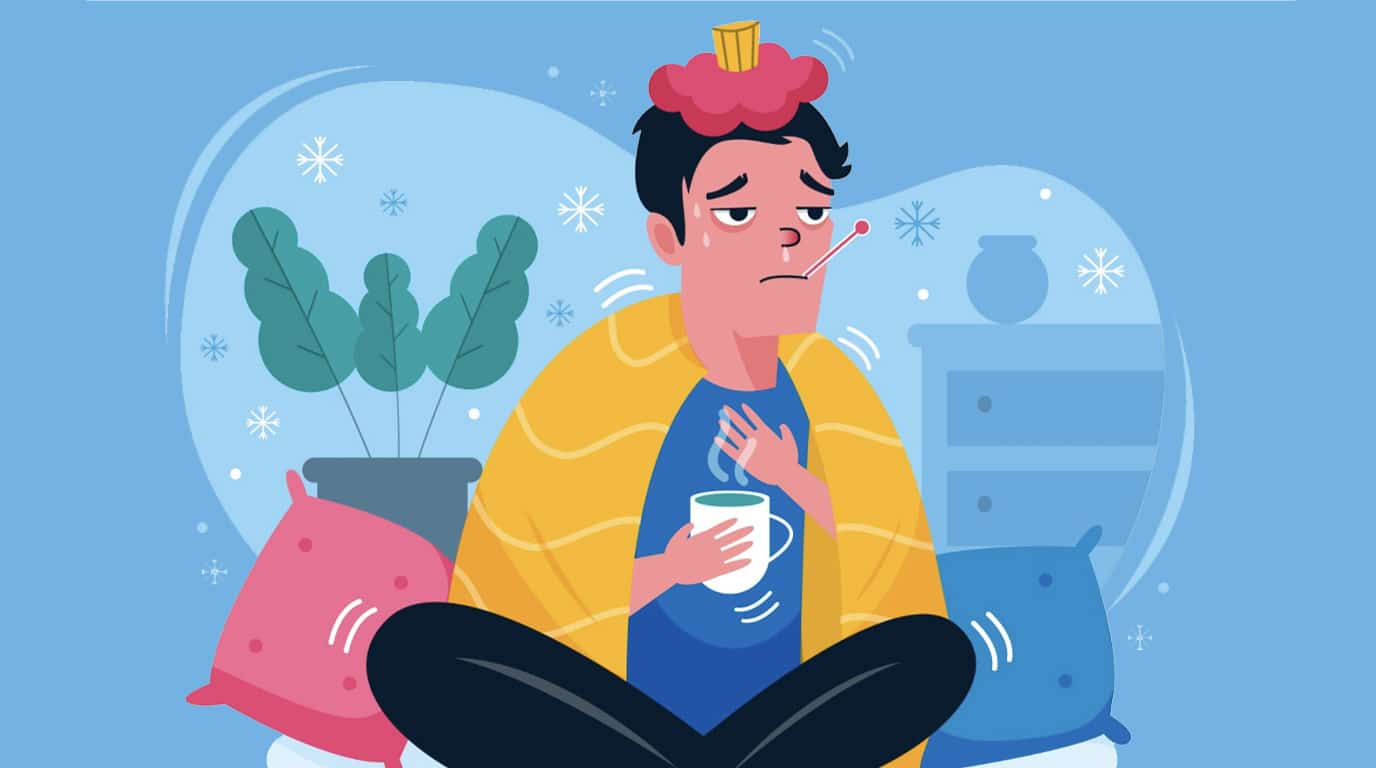

Being sick with the flu or another illness can temporarily increase your risk of kidney stones if you lose fluids and don’t replace them. But don’t worry that a few days of illness means you’ll form a kidney stone. Stones typically develop over a much longer period.
Flu season is starting, and I want to talk about how to care for yourself when you’re sick, especially with a fever, vomiting, or diarrhea.
I know many of my patients worry when they can’t keep up with their usual water intake. But remember what I always say: No one makes a stone in a day!
I’ve written an entire article explaining how long it takes to form a kidney stone. Please read it if you’re worried about missing your water goals for a few days. Kidney stone prevention depends on what you do consistently over time, not on a few imperfect days.
That doesn’t mean we should ignore hydration when we’re sick. It simply means we need to put the risk into perspective.
Why Being Sick Drops Your Urine Volume
When you’re sick with a fever, vomiting, or diarrhea, your body can lose more fluid than usual. And because you may not feel like eating or drinking, you might not be replacing what you’re losing.
The result can be lower urine volume and more concentrated urine, which is something we work hard to avoid with the Kidney Stone Diet®.
But here’s what I really want you to understand. Having concentrated urine for a few days isn’t the same as forming a kidney stone. What concerns me is letting the conditions that favor stone formation continue over time.
Our usual goal is to produce at least 2.5 liters of urine each day. Notice I said produce, not drink. If you’re losing extra fluids because you’re sick, you may not be producing as much urine as you normally would.
I’ve talked about the importance of urine volume in my episode on preventing kidney stones with water.
So if you’re sick, please don’t panic about your kidney stones. Focus on getting better, drinking what you can, and knowing when to ask your doctor for help.
A Sick-Day Fluid Plan
When you’re sick, the last thing you may want to do is eat or drink anything. If you have no appetite, don’t worry about eating your usual meals for a few days. Right now, focus on keeping hydrated.
Keep a glass or bottle of water nearby, whether you’re resting in bed or lying on the couch. If your stomach is upset, take small, frequent sips instead of a large glass all at once.
If plain water doesn’t sound appealing, you can try warm water or herbal tea. The important thing is finding fluids you can tolerate and drinking them regularly throughout the day.
And don’t make this complicated. You don’t need to spend the day measuring every ounce while you’re feeling miserable. Pay attention to how much you’re drinking and whether you’re urinating less than usual.
If you struggle to drink enough water even when you feel well, check out my water tips and tricks. Plenty of ideas can make hydration easier.
Remember, you don’t have to be perfect with your water intake every single day. Just do your best to replace the fluids you’re losing. If you can’t keep fluids down, contact your healthcare provider.
Electrolyte Drinks and Broths
I get lots of questions about electrolyte drinks. They’re everywhere these days, and many people assume they’re better than plain water.
For most kidney stone patients going about their everyday lives, electrolyte drinks aren’t necessary. But if you’re sick with vomiting or diarrhea, that’s different because you’re losing fluids and electrolytes.
And this is where I want you to give yourself a little grace. I know how hard many of you work to follow your kidney stone prevention goals. But when you’re sick, you don’t need to worry about every milligram of sodium in your drinks or broth.
In fact, sodium helps your body retain fluids, which is why electrolyte drinks and broth include it. When you lose fluids through vomiting or diarrhea, replacing those fluids and electrolytes matters more than sticking to your usual sodium goal.
If an electrolyte drink or a warm cup of broth helps you stay hydrated, please don’t feel guilty about having it. Your regular Kidney Stone Diet goals will still be there when you’re feeling better.
If you’re having significant vomiting or diarrhea, contact your healthcare provider about replacing lost fluids and electrolytes, especially if you have kidney disease, heart failure, or have been told to restrict fluids or sodium.
Remember, kidney stone prevention is about what you do consistently over time. A few days of illness isn’t the time to worry about following every dietary goal perfectly. What matters most right now is feeling better!
I’ve written more about electrolyte drinks in my article, Electrolyte Drinks: Do You Need Them?.
Cold and Flu Medicines to Ask a Pharmacist About
When you’re feeling miserable, it’s tempting to grab whatever cold or flu medicine promises to make you feel better.
But just because something is sold over the counter doesn’t mean it’s appropriate for everybody.
Some medications, including anti-inflammatory pain relievers such as ibuprofen and certain decongestants, deserve extra attention depending on your kidney function, blood pressure, and medical history.
If you have chronic kidney disease (CKD), take prescription medications, or have other medical conditions, please check with your pharmacist or doctor before starting a new cold or flu medication.
And if you already take a diuretic or another prescription medication, ask your healthcare team whether you need special instructions. At the same time, you’re sick, particularly if you’re vomiting, having diarrhea, or becoming dehydrated.
Don’t stop or change prescribed medications on your own.
I know it’s one more thing to think about when you already feel terrible, but a quick conversation with your pharmacist can help you make a more knowledgeable decision.
When to Call the Doctor
Most of us have had illnesses where we don’t feel like eating or drinking much for a few days. That doesn’t automatically mean something serious is happening.
But sometimes you shouldn’t try to manage everything at home.
If you’re repeatedly vomiting, having persistent diarrhea, unable to keep fluids down, or producing very little urine, contact your healthcare provider. You may need help replacing lost fluids.
If you have a known or suspected kidney stone and also have fever or chills, seek urgent medical evaluation. Don’t ignore that.
And if you have chronic kidney disease or another medical condition that affects your fluid balance, follow the sick-day instructions your healthcare team has given you.
Remember, when you’re sick, your priority is taking care of yourself. You don’t need to worry about meeting every dietary goal while you’re recovering.
When you’re feeling better, get back to your usual routine and your six Kidney Stone Diet goals. You don’t need to make up for the days you were sick, and you certainly don’t need to feel guilty about them.
And finally, one of the best ways to get through cold and flu season is to take care of yourself before you get sick. Wash your hands often, eat well, get enough sleep, stay physically active, and keep up with your recommended vaccinations. These simple habits can help support your immune system and lower your chances of getting sick. We can’t prevent every illness, but we can certainly do our part to stay healthy.
Your friend,
Nurse Jill







Leave a Reply