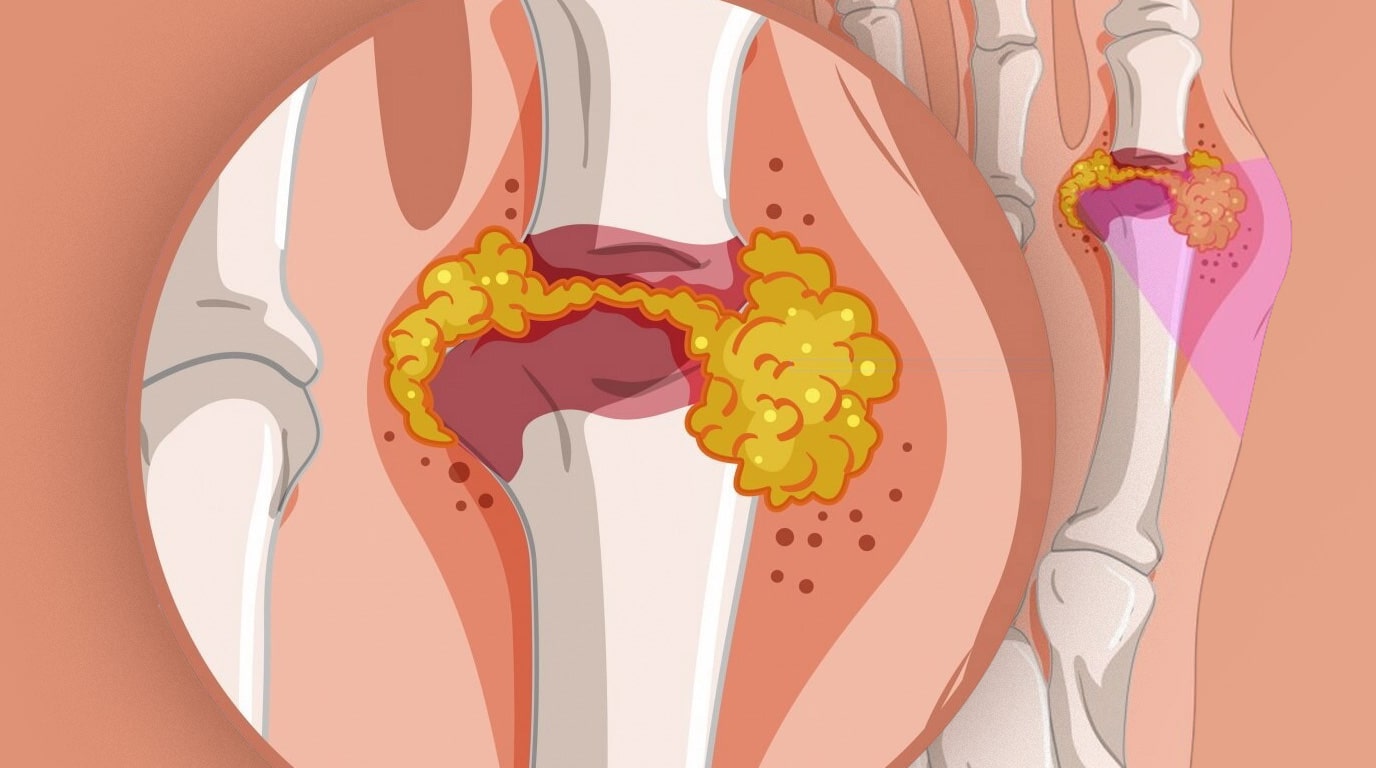

Yes, gout and kidney stones can be connected because both involve uric acid. If you have gout and have also had kidney stones, some dietary changes may help both conditions, but not all kidney stones are made of uric acid. Knowing what type of stone you make is the first step toward understanding which dietary changes will actually benefit you.
I’ve been teaching kidney stone prevention since 1998, and I often find people following all kinds of dietary advice without understanding why. My goal is always to make eating less confusing, not more complicated. When you understand what’s happening in your body and what your 24-hour urine collection tells you, you can make better decisions about what belongs on your plate.
Uric Acid, Gout and Uric Acid Stones
Uric acid is a waste product your body makes when it breaks down substances called purines. Purines occur naturally in your body, but they’re also found in many of the foods we eat. Normally, your kidneys remove uric acid, but when it builds up, it can cause problems.
With gout, uric acid crystals can collect in your joints, causing painful inflammation. With uric acid kidney stones, the problem happens in your urine. When your urine becomes too acidic, uric acid has a harder time staying dissolved, making it easier for crystals to form and eventually become stones. This is why gout and uric acid kidney stones can occur in the same person.
Something I really want you to understand is that having gout does not automatically mean you make uric acid kidney stones. You can have gout and still form calcium oxalate stones, which require different considerations. That’s why knowing your stone type matters. If you’ve passed a stone or had one removed, ask whether it was analyzed. You can also learn more about uric acid stones and why they form in my other article.
How Uric Acid Stones Differ from Calcium Oxalate Stones
Most of the patients I teach make calcium oxalate stones, but uric acid stones develop under different conditions. With calcium oxalate stones, we’re often looking at things like too much calcium or oxalate in the urine, not enough citrate, or simply not making enough urine throughout the day. These are some of the reasons I teach patients to pay attention to sodium, dietary calcium, oxalate, and fluid intake.
With uric acid stones, urine acidity matters even more. When your urine pH is too low, uric acid doesn’t dissolve as easily, which creates an environment where stones can form. You might be doing a wonderful job lowering your sodium and drinking plenty of water, but if your urine remains very acidic, you may still be at risk for uric acid stones.
This is also why I don’t want patients unnecessarily restricting foods. If you form uric acid stones, eliminating every food that contains oxalate won’t address the main problem. On the other hand, if you form calcium oxalate stones, focusing only on purines won’t address everything that could contribute to stone formation. That’s exactly why the Kidney Stone Diet® has six goals instead of focusing on just one part of your diet. Each goal addresses a different factor that can contribute to kidney stones, and your stone type and 24-hour urine results help us understand which goals need the most attention.
Purines, Meat, Alcohol and Fructose
When people hear they have gout or uric acid stones, they often become afraid to eat meat. I understand why, because so much of the advice they receive focuses on avoiding foods that contain purines. Some foods, particularly organ meats, red meat, sardines, anchovies, and certain shellfish, contain higher amounts of purines. Chicken and turkey also contain purines, though amounts vary by food.
You don’t necessarily have to eliminate meat protein from your diet. You do, however, need to pay attention to how much you’re eating. When I say meat protein, I mean beef, chicken, turkey, pork, fish, and seafood. Large portions of these foods can affect your urine chemistry, and I discuss that with many of my patients, regardless of stone type. To make this easier, we’ve created a free Meat Protein Calculator to help you understand how much meat protein is appropriate for you. I want you eating enough protein without overdoing your meat portions. As I always say, portion, not perfection.
This is also why I have concerns about the carnivore diet for people prone to kidney stones. When you eat mostly meat and very few fruits and vegetables, you may get more meat protein than your body needs. Too much meat protein can increase calcium in your urine, lower citrate, and make your urine more acidic, all of which can increase your risk of kidney stones. Some people choose a carnivore diet to avoid oxalate, but removing oxalate from your diet doesn’t eliminate your risk of forming stones. You could be changing your urine chemistry in ways that increase your risk of other stone types, including uric acid stones. I explain more about these concerns in my article on popular diets and kidney stones.
Alcohol is another consideration, particularly beer, because it can contribute to problems with uric acid. It can also make it harder to stay properly hydrated, and I want all kidney stone formers to avoid dehydration. If you have gout, uric acid stones, or both, paying attention to how much alcohol you’re drinking is an important part of managing your risk.
Added sugar deserves attention, too, especially fructose from sweetened beverages such as regular soda. These drinks can contribute to uric acid problems, and reducing added sugar is already one of the goals I teach my kidney stone patients. I explain more about this in my article on why added sugar matters for kidney stone formers. This doesn’t mean you need to fear fruit. I would much rather see you enjoying reasonable portions of whole fruit than drinking soda throughout the day. The key is to recognize where added sugars come from and make sensible changes. If you’re having trouble cutting back, I’ve also put together practical tips and tricks to lower sugar and help you get started without feeling deprived.
Where the Two Diets Agree and Where They Differ
The good news is that much of the dietary advice given to people with gout overlaps with the six goals of my Kidney Stone Diet®. Both approaches encourage drinking enough fluids, limiting alcohol, watching meat portions, and reducing added sugar. These are practical habits that can help you manage your diet without feeling like you need two completely different sets of food rules.
Where things differ is in the additional goals I teach for kidney stone prevention. With my Kidney Stone Diet®, we also focus on lowering sodium, eating enough dietary calcium, and managing high-oxalate foods when appropriate. These goals matter especially for many calcium oxalate stone formers, but they aren’t necessarily the main focus of dietary advice for someone with gout.
For example, someone with gout may spend a lot of time worrying about purines while never thinking about how much sodium they’re eating or whether they’re getting enough calcium. Meanwhile, someone who develops calcium oxalate stones may carefully avoid high-oxalate foods without realizing their urine is also very acidic. That is why I always encourage people to look at the whole picture rather than focus on just one food or one number.
You can follow the six goals while also paying closer attention to foods that are especially high in purines if you have gout or uric acid stones. You don’t need to make every meal a complicated calculation. You need to understand which parts of your diet deserve the most attention based on your medical history, stone type, and urine results.
I also know that understanding what you should eat and actually figuring out what to make for breakfast, lunch, and dinner are two different things. That’s why I created my Kidney Stone Diet® Meal Planning Service. Every week, I share meal ideas and recipes to help you make healthier choices while following the six goals. Use these meals as inspiration, and adjust them to fit your needs and preferences. My goal is to show you that eating for kidney stone prevention can still be enjoyable, satisfying, and practical for everyday life.
Why Urine pH Matters
If you make uric acid stones, I especially want you to understand your urine pH because it is one of the most important factors in preventing this type of stone. Urine pH tells us how acidic or alkaline your urine is. Uric acid is more likely to form crystals when your urine is too acidic, especially when the pH falls below 5.5. These crystals can eventually become kidney stones, which is why keeping your urine pH in the right range is such an important part of prevention.
This is another reason I encourage patients to be careful with very meat-heavy diets. Eating large amounts of meat protein while cutting back on fruits and vegetables can make your urine more acidic. Jeff and I discuss this in our episode, The TRUTH About the Carnivore Diet and Kidney Stones, if you’d like to learn more about why I have concerns about this way of eating for kidney stone formers.
For uric acid stone formers, I generally aim for a urine pH around 6.0 to 6.3, though the right goal depends on the individual. Eating more fruits and vegetables, reducing excessive meat protein, and drinking enough fluids can help improve urine chemistry. However, sometimes dietary changes alone aren’t enough to bring urine pH into the desired range.
Your physician may recommend a medication such as potassium citrate to help raise your urine pH. This can help some patients, but I never want you taking something just because you heard it might prevent kidney stones. Raising urine pH too much can increase the risk of calcium phosphate stones in susceptible patients, so treatment needs to be individualized and monitored. If you’ve been prescribed this medication or are wondering whether you need it, I explain more in my article, Potassium Citrate: Miracle Stone Stopper or Medical Myth?.
I’ve written an entire article explaining urine pH and its role in kidney stone prevention because I think every kidney stone former should understand it. Whether you’re forming uric acid, calcium oxalate, or calcium phosphate stones, your urine chemistry matters, and your treatment should reflect what’s actually happening in your body.
This brings me back to something I say all the time: test, don’t guess. A 24-hour urine collection gives us valuable information about your urine volume, calcium, oxalate, citrate, uric acid, and pH. It also shows whether the dietary changes you’ve made are improving your urine chemistry. If your doctor hasn’t ordered a collection, ask about getting one, and if you’ve already made changes, remember that follow-up testing is important, too.
I don’t want you leaving your doctor’s office with a long list of foods you’re suddenly afraid to eat. I want you to understand your stone type, know your urine results, and feel confident about the changes you’re making. If you have gout and kidney stones, the dietary advice overlaps a lot, and you may be able to manage both without making eating unnecessarily restrictive.
If you’re struggling to put all of this together, especially if you’re managing gout along with kidney stones, you don’t have to figure it out on your own. In my private consultations, I work with patients individually to review their 24-hour urine results, discuss their current eating habits, and help them make changes that fit their needs. This is especially helpful when you’re trying to balance dietary recommendations for more than one health condition. My goal is to help you understand what matters most to you and put that knowledge into practice.
Remember, food is an important part of prevention, but some people will also need medication to manage their gout, uric acid levels, or urine pH. Work with your physician to determine what’s appropriate for you. My job is to help you understand the dietary part so you can make informed decisions and become a better advocate for your own health.
Your friend,
Nurse Jill






Leave a Reply