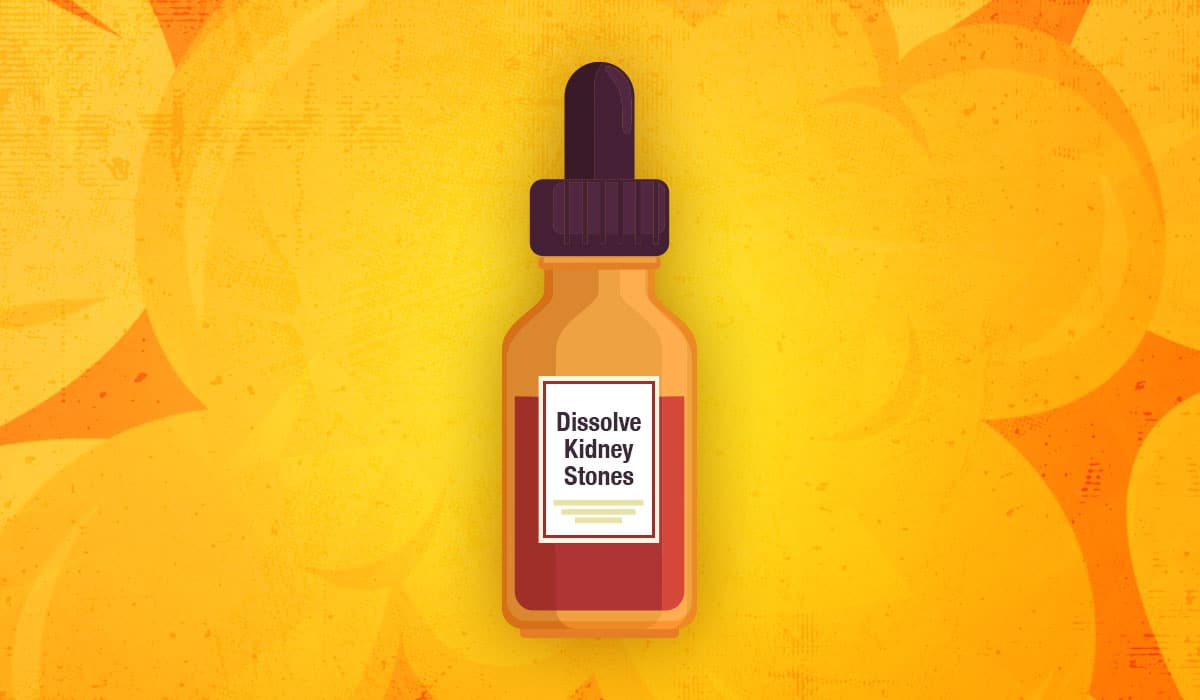

Kidney stone patients all ask the same hopeful question: “Can I dissolve this stone!?”
An understandable question. If you have ever passed a kidney stone, had surgery, worn a stent, or sat in the ER scared and uncomfortable, of course you want a gentler answer. Of course, lemons sound better than lasers. Of course, an herb called chanca piedra, which translates to “stone breaker,” sounds tempting.
Most stones can‘t be dissolved
Kidney stones are not soft little clumps of sand waiting for lemon water to melt them away. They are hard mineral deposits. Some are very hard. Some are so dense and stubborn that even medical treatments designed to break stones may struggle with them, depending on the stone’s size, location, density, and what it is made of.
That is the part so many people don’t realize. A kidney stone is not one single thing. There are different types of stones, and they do not all behave the same way.
The most common kidney stones are calcium-based stones, especially calcium oxalate stones. These stones do not dissolve because you drink lemon water, apple cider vinegar, cranberry juice, herbal tea, or chanca piedra.
Once a calcium stone has formed, the goal is usually to pass it, watch it, or remove it if needed. The better long-term goal is prevention, which means figuring out why you are making stones and lowering your future risk.
Why lemon water is not a stone-melting treatment
This is where patients often get misled. They hear that citrate can help prevent stones, and then they assume lemon juice can dissolve a stone that already exists. Those are two very different things.
Citrate can help make urine less stone-friendly by raising pH. It may bind calcium in the urine, lowering the risk of certain calcium stones forming. But that does not mean that lemon juice melts an existing calcium oxalate stone, as sugar does in hot tea.
Stones are harder than people think
Some stones are especially hard to break. Calcium oxalate monohydrate, brushite, and cystine stones are known to be more resistant to shock wave treatment. That means even medical treatment may have a harder time breaking them apart. A laser used during surgery is a powerful tool placed directly near the stone, and even then, some stones require more time, more energy, or multiple procedures.
So when someone online says, “Just drink this and dissolve your stone,” I want you to pause. If medical tools sometimes struggle to break certain stones, it is neither fair nor honest to tell patients that lemon water or a supplement will dissolve them.
The important exception: uric acid stones
Uric acid stones are different because they can sometimes be dissolved. This works because uric acid behaves differently in the urine than calcium oxalate does.
Uric acid is more likely to form stones when the urine is too acidic. When urine pH is raised into the right range, uric acid becomes more soluble. In plain English, that means it can remain dissolved in the urine rather than forming or maintaining a stone.
Why urine pH matters for uric acid stones
This process is called urine alkalinization. The goal is to make the urine less acidic, usually with medications such as potassium citrate or, in some patients, sodium bicarbonate. This needs to be done under medical supervision because urine pH matters.
If the urine stays too acidic, the uric acid stone may not dissolve. But if the urine pH is too high, it can create other problems, including increasing the risk of calcium phosphate stones in some patients.
More is not better. We are not trying to fix one stone problem by creating another one.
This is why testing matters so much. A patient may be drinking plenty of water and still making uric acid stones if their urine pH stays too low. They may be doing many things “right” and still missing the main problem because the main problem is not always obvious from symptoms. A 24-hour urine collection can help show what is happening in the urine over a full day. It can show urine volume, urine pH, calcium, sodium, citrate, oxalate, uric acid, and other risk factors. Guessing is where people get into trouble.
Natural remedies patients ask about
Now let’s talk about the “natural” treatments people ask about, because I know these questions are coming…
What about lemon water?
Lemon water may play a role in preventing stones for some people, as lemons contain citrate. Citrate can be helpful, especially for patients with low urine citrate. But lemon water is not a reliable way to dissolve an existing kidney stone. It may support prevention in the right person, but it is not a magic eraser.
I am not against lemon water. I am against pretending lemon water is a urology procedure. And also against the generic call for it. It can be a total no-no for different reasons and stone types. You will know if it can help you by completing a 24-hour urine collection.
What about chanca piedra, or “stone breaker”?
Chanca piedra is another one that people ask about all the time. Again, I understand why.
When something translates to “stone breaker,” it sounds like it was made for kidney stone patients. But the name sounds more convincing than the evidence.
There is some research on chanca piedra, and it may have small effects on urine chemistry or stone burden in some patients. But “may help a little in small studies” is not the same as “this will dissolve your stone.” That is the distinction patients need to understand. “Stone breaker” is a powerful name, but powerful names do not replace good evidence.
What about apple cider vinegar?
Apple cider vinegar also comes up in this conversation because it is one of those wellness remedies people hear about for nearly everything. There is no good evidence that apple cider vinegar dissolves kidney stones. It may make a nice salad dressing. It may also cause reflux, teeth, or stomach problems for some people. But it should not be treated like a stone dissolver.
What about drinking more water?
Water is another one worth clarifying. Drinking enough water is one of the most important things kidney stone formers can do. It helps dilute the urine, lowers the concentration of stone-forming minerals, and may also help when you are trying to pass a small stone.
But water does not dissolve most stones.
That is the key difference. Water is powerful for prevention because more urine volume means the minerals in your urine are less concentrated. That can lower your risk of forming new stones. But prevention is not the same as dissolving a stone that already exists.
Water matters deeply. It just does not work like a stone-melting treatment.
How uric acid stones may be dissolved
For uric acid stones, treatment can be very effective when done correctly.
Potassium citrate is commonly used because it raises urine pH and reduces acidity. Some patients may use sodium bicarbonate or sodium citrate instead, but that choice depends on your full medical picture.
A word of caution: Sodium-based treatments aren’t ideal for everyone — especially calcium stone formers who are sensitive to sodium.
One person’s helpful treatment can be the wrong plan for someone else.
This is why you should never treat yourself blindly.
Diet can play a role
Diet may also matter for patients with uric acid stones. Large portions of animal protein (carnivore, paleo, and low-carb diets), especially organ meats, certain seafood, and heavy meat intake, can increase the body’s uric acid load.
Hydration matters too. Heavy alcohol intake can lead to dehydration, and not drinking enough water can do the same. When urine volume is low, the urine becomes more concentrated, and urine pH may stay lower. That acidic environment is exactly what uric acid stones like.
But here is the important point: with uric acid stones, low urine pH is often the main driver. You cannot always fix the problem by only cutting back on meat if the urine stays too acidic. That is like mopping the floor while the sink is still overflowing.
You may need diet changes, medication, better hydration, or a combination of all three. Again, that is why 24-hour urine collections are a must! Here is an article on popular diets that cause kidney stones.
Medical conditions linked with acidic urine
Some people are more prone to acidic urine because of what is happening in their bodies. This can include type 2 diabetes, insulin resistance, metabolic syndrome, gout, high uric acid levels, chronic diarrhea, Crohn’s disease, bowel surgery, ileostomy, chronic dehydration, or consistently low urine volume.
This matters because uric acid stones like acidic urine. When the urine pH stays too low, uric acid has a harder time staying dissolved. That is when crystals and stones can form. This is why the answer is not always “drink more water” or “eat less meat.” Those things may help, but if the urine pH stays low, the main problem may still be sitting there waving its little red flag.
Why your stone type matters
This is also why knowing your stone type matters. You cannot know whether your stone can dissolve unless you know what kind of stone you have, or your doctor has strong evidence based on imaging, urine pH, stone history, and labs. Stone analysis matters. A 24-hour urine collection matters. Blood work matters. Imaging matters.
Without that information, patients often work very hard on the wrong problem. They drink lemon water for a calcium stone, thinking it will dissolve. They take chanca piedra for a stone that may be too large to pass. They avoid calcium because they have “calcium stones,” which can backfire by raising urine oxalate. They try apple cider vinegar while their urine pH remains too low.
That is heartbreaking to me because patients are not lazy. They are usually trying very hard. They are just not always getting the right information.
What to ask your doctor
A better question than “What can I take to dissolve this?” is, “What kind of stone do I have, and is it the kind that can dissolve?” That question changes everything.
If it is a calcium oxalate stone, the plan is not dissolution. The plan is prevention, monitoring, and treatment if needed. If it is a uric acid stone, your doctor may discuss raising your urine pH and carefully tracking it. If it is a cystine stone, brushite stone, struvite stone, or another type, the plan will depend on the cause and the details of your case.
The bottom line
The bottom line is this: most kidney stones cannot be dissolved. Calcium stones do not melt away with lemon water. Chanca piedra does not get to call itself “stone breaker” and skip the evidence line. Apple cider vinegar is not a kidney stone treatment, just because the internet keeps recommending it for every problem under the sun.
But uric acid stones are the exception. They can sometimes be dissolved by raising the urine pH, usually with medication and under your doctor’s monitoring.
So before you spend money on a supplement, buy another jug of vinegar, or start blindly drinking lemon water, get the facts. Ask what kind of stone you have. Ask about a 24-hour urine collection. Ask what your 24- hour urine pH is. Ask whether your stone is one that can actually dissolve. As a side note, stop spending money on pH test strips. They are not useful here. We want a full day’s worth of urine pH readings from a 24-hour urine collection.
A personal note from Nurse Jill
You will notice, dear reader, that this blog post is much longer than what I usually write. That is intentional.
This topic matters too much to rush.
I cannot tell you how many patients I have seen in my decades of prevention work who delayed needed care because they were hoping a potion, supplement, or “stone-breaking” remedy would dissolve their stone.
Sadly, most of those stones were never going to dissolve. And in some cases, that delay led to serious complications, including sepsis.
As a nurse, these stories make me angry because patients deserve better information. As a human being, they break my heart.
That is why I want you to understand the difference between prevention, treatment, and wishful thinking sold with a convincing label.
I am not writing this to scare you. I am writing this because I do not want you sitting at home waiting for something to work while your body may be telling you it is time to get medical help.
Natural does not always mean harmless. “Stone breaker” does not always mean stone-breaking. And hope is not a treatment plan.
Please learn your stone type. Please ask good questions. Please get urgent medical care if you have a fever, chills, uncontrolled pain, vomiting, trouble urinating, or feel seriously unwell.
You matter too much to wait on a remedy that may never work.
Your friend,
Nurse Jill






Leave a Reply