Transcript
00:00:00 Jeff Sarris
SPYR.
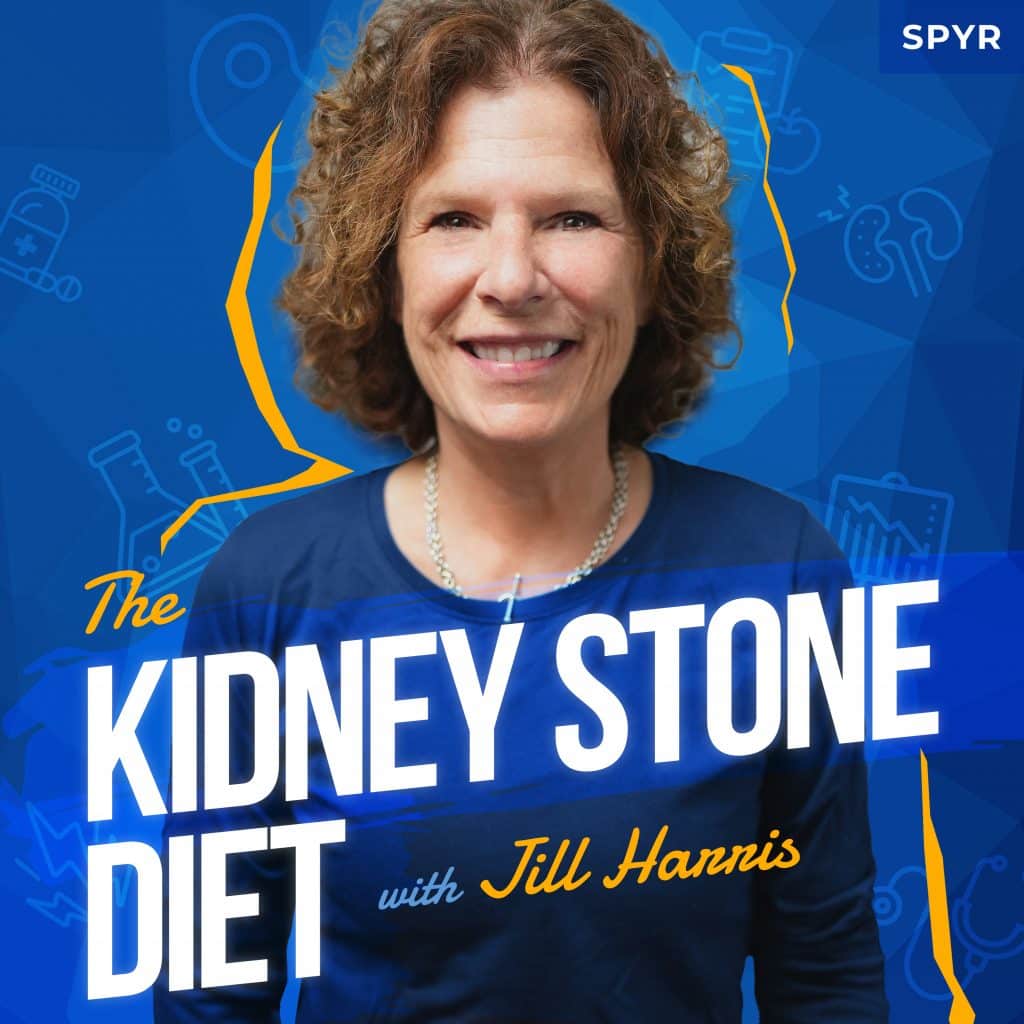
Welcome back to the Kidney Stone Diet podcast, the show about reducing your kidney stone risk and living your best life. I'm your host and fellow student, Jeff Sarris.
And I'm Jill Harris, your kidney stone prevention nurse.
Avocados and Oxalate Content in Kidney Stone Diets
Yes, so we are back at it again, and today we are going to go right into a frequently asked question. This is one that, I know you get a lot of questions about just because it might not be as clear, but it is a very prevalent topic, a very prevalent part of a lot of people's lives. So, and diets, diets within their lives, but we're going to talk about avocados today.
Avocados! Beautiful, beautiful avocados. Avocado toast!
You know, avocado toast is being sold in our city for like $19. I swear to God. What, does it have gold glitter in it?
I, you know, people have lost their freaking mind with avocados. That being said, I love them.
I love them. But people have gotten a little carried away with avocado and toast. Anyway.
It is a daily, "Jill, I heard, I can't have avocados, very high, very high." Okay, let's break this down people. All my patients eat avocados, enjoy. It's a good healthy fat
Filled with fiber, wonderful fruit. And yes, it's a fruit. Wonderful, wonderful way to get omega fatty acids, fiber, good healthy fat, okay?
So they're good for you and they're very filling.
Now,
Harvard says, "But Jill, Harvard says they're high in oxalate." Well, Harvard says for one medium, one medium…
Harvard, all of a sudden you went blank!
Yeah, my screen went blank. I have a different camera, so I am I was just adjusting a little bit here and…
You're still cute. Jeffrey, are you telling are you saying that you're not paying attention to avocados, you're adjusting your camera?
Oh, no. I am listening. I was just adjusting the brightness just a little, and by a little, I mean all the way to nothing!
Harvard Oxalate Food Lists and Portion Sizes
Oh, that was fun. Okay, so people always say Harvard says… So Harvard says that one medium avocado is 19 mg of oxalate and then in the description it will say "very high".
Now,
I, Harvard lists the food, the amount of the food that was studied, and the amount of oxalate, and then they have the adjectives:
Very high, low, a little low, super-duper freaking high, they have all these adjectives. So people don't read the amount of oxalate in the portion size, they just read "super-freaking high" and in their mind they're like, "I have to stay away", which makes perfect sense.
But what I've done is I've taken Harvard's list
And what we did at kidneystonediet.com, which is Jeff, Dave, and I, what we did was, we took away the adjectives. And we have the total oxalate food list, which has the original Harvard list, and then the safe oxalate food list, which is basically all the foods without the adjectives on it, okay?
So, we teach you this:
You get 100 mg of oxalate a day unless your doctor has told you differently. You use it how you want to. If you're somebody who loves to have an avocado, because it works great for your diabetes, it works great for your keto diet, or works great for your fiber, whatever you're doing,
That's 19 mg for a medium one.
If you have half, it's only 8 1/2 or whatever the hell it is, people. Whatever. Whatever.
9, whatever. I'm not a mathematician. Shut up, Jeff!
I see you laughing.
So, I mean, first of all, it's portion. So when I do have an avocado, I'm not eating a whole avocado. But if you wanted to, you could, and then you have about, you know, 81 left to use.
So don't go by the adjectives. I, what I find in my practice, is people start taking away too many healthy foods because Harvard says it's high or very high. Look at how much they say it is.
Subtract that from your 100 mg budget and you're good. Now,
Calcium Intake and Portion Control for Kidney Stones
"Jill, Harvard didn't study this, Harvard didn't study that." The golden rule of thumb is if Harvard didn't study it, have that food once or twice a week in a normal portion size, normal portion size. Get enough calcium every day.
My patients don't make stones because I see the follow-up urine collections and their oxalate remains within normal range.
Before they started eating calcium or drinking things that had calcium in it, before they stopped eating handfuls of almonds, before they stopped baking with almond flour and almond milk and taking the spoon because they're on keto and eating the peanut butter right out of the jar again with no calcium,
Before they stopped doing that, their oxalate was high. Once you eat food, people, in normal portions, you don't really have too many problems with anything, right? Too much sugar, too much salt.
When we lower our portion sizes, we lessen our salt, we lessen our sugar, right? So, again,
We Americans specifically overeat food. I ain't got no shame in saying that. But if you're a real-life person, you're overweight, could be you're eating too many calories for how much you're expending.
It's just it's sometimes just simple math. Yes, meds can contribute, certain things can contribute, but no, you got to work harder then, okay, if possible. That doesn't mean that I don't see people here who have other things that are really curtailing them from losing weight.
That's a that's a different subject. I see you, too. But for the average person, when we start eating food in normal portion sizes—let's say this.
When someone says, "That's my favorite food," it's telling me they're eating it every single day, every day.
Because that's what people do. "Well, Jill, Reader's Digest, I was sitting on the commode, I was using and I picked up the Reader's Digest, and it said right there avocados are good. So I was eating five a day, because if they're good, one, then five is better." It's not!
Then you do have really high oxalate, because most of you are not getting any calcium.
So please remember,
You can eat even foods that say "high" in on Harvard's list, as long as you look at how high is high? Is that really high? Is 19 mg out of a 100 that you're allowed to have super high?
No! So don't take away a really great fat, high fiber, filling, good for a lot of other medical conditions food,
Before you check that list. Don't go by the adjectives is what I'm trying to say, and that's why we have the safe oxalate list. Go to kidneystonediet.com and you can find it there on the start page.
Of course, it's free. Anything else, Jeff?
Daily Oxalate Budgeting With the Bank Account Analogy
Well, yeah, having that sort of balance, that daily balance I think is so important and to sort of the amount of oxalate that you can pull from, sort of your bank account. You've sort of referred to it as a bank account, and I always find that, I like that analogy because it's a good way to look at it, that like you only have so much store of that value available, so you need to use it appropriately, or accordingly.
Yeah, when I'm talking to patients I'm like, "All right, here you go. You have, I'm putting right now, I'm depositing 100 bucks of oxalate in your bank account. Along with that deposit, here's your debit card.
You're a big boy or girl. I'm not going to tell you what foods you can and cannot eat, but y'all know you can't, you'll be, you'll be overdrawn if you pick a cup of spinach, so that's off. You just have to stay within your limits and get your calcium every day." And people understand that analogy.
So, also the bigger thing with that, and why I came up with that analogy, is it gives people control back. Because what I see every day is people feel like, "Holy shit!" Sorry, YouTube. "Ho-, sorry, audience.
But holy shit! I'm making these stones. I'm doing everything right.
I'm eating healthy and look at this. I'm making stones. I don't know my head from my butt anymore," right?
So people are, they feel out of control. They don't know what to do. So by giving them the account with their own debit card, they can make their own healthy choices.
And that's the beginning of understanding how to eat well. It's your choice. We're not going to tell you—the Kidney Stone Diet is a set of goals.
We're not telling you to do paleo or keto. We're also telling you not to do that, not to do that if that's what makes you happy and you can fit into our goals.
In order to be compliant to a healthy lifestyle, one has to look at their plate and be happy with it.
That is key.
And so, that's why the Kidney Stone Diet is a set of goals instead of us telling you must eat this. So, that's really important. When you get your control back, you get confidence and you feel like you really have, you know, you can really do this.
It's not hard. You just have to be educated, and you have to be given the confidence, and, but first, you have to be educated, right? And that's why we do what we do here.
Yeah, absolutely. And like on that note, for everyone listening, watching, if you haven't subscribed already, it means the world to us if you do, if you hit that little subscribe button, if you're on YouTube hit the little bell, and share this episode, any episode that you find valuable, with people who need the info, because it's so important for us to get this out to as many people as we can just because it is an under- I feel like it's an area where we're all sort of under-educated just on health and wellness and, specifically, when it comes down to kidney stones.
There's a lot to look at, and like you said, like, more health isn't healthier. Like, more of a healthy food doesn't make you healthier, and it's so easy to fall into that trap. We all do it.
I mean, I've definitely, when I sort of dove into health and wellness, like almonds and spinach were a big part of my everyday, just in the diet, and thankfully, up until this point, I haven't suffered through stones, but it was a big part for a stretch of time, and it wasn't until we met that I was like, "Oh wow, that is not good." Like, I knew nothing about kidney stones at all.
Well, that's the thing, right? Go ahead, I'm sorry, I cut you off.
Well, yeah, like you just don't know what you don't know, was all.
Dietary Mindset and Resources for Kidney Stone Prevention
You don't know what you don't know. We'll say it over and over again, and this is why my heart I feel so much in my heart about because I have a Most of my patients, I mean all of my patients, are super smart people. We're all super smart people.
So why don't we understand this? And it doesn't, you know, to me, you know, talking about chemistry or the carbohydrate and how it breaks down, people, you know, if you want to know that stuff, go you go research that. For the average person, the average smart, real person, they just want to know how they freaking do this.
So, you've got to talk to people, and the first thing that comes to mind is: What kind of foods do you like? How would you like to eat? And don't talk to me about Ding Dongs and Twinkies, people.
Come on, I always say, stop eating like a teenager. You've got to grow up and eat healthy food. So which ones are you willing to eat, right?
And then we've got to teach people that, you know, you can't eat the same seven foods for the rest of your life. Your body may want some other nutrients. And also, we have to stop saying, "Well, I hate this." Well, you've been saying that since you were eight.
You know, write a different story. Pick up a pen, turn the page, and write a different story. Again, I've said this, too.
I can't tell you how many people come to me and say, "I don't eat vegetables." Well, try some. There's so many in the grocery store. And then they try them, and then a month later they call me and they're like, "I like vegetables now.
I tried them." Because they didn't they didn't buy any for 40 years, right? The world, we live in such All of us live in such a small, tiny place in our head sometimes. I do, too.
And that's how I know how to talk about this stuff, plus what my patients tell me. And so when you open your eyes, when you're lucky enough to have somebody, like I have wonderful friends and family that will say, "Girl, you might want to look at this a little bit differently, like rise above." I'm like, " oh, yeah!" We all get stuck in our heads, and nutrition is one of those things.
"I read an article 10 years ago, so this is what I did, and I never thought about it again, and this is what I've been doing." And before you know, you know, you make a kidney stone. So we don't know what we don't know, but it's our responsibility and obligation to find out, and that's why we have our channel here.
Yeah, absolutely. So with that, thank you again for listening. If you have any questions that you would like answered in a future episode, the number is 773-789-8763 and we will feature your question in the future.
And also, if you have any pressing questions, you can always reach out on the Facebook group and there's so many different channels. The Kidney Stone Prevention Facebook group is where you would find that, but also you can find the link at kidneystonediet.com. But there are so many different channels and different ways that we're doing our best to spread this education to as many people as possible.
There's the email newsletter on the site where every Saturday Jill sends an email to sort of keep you on track and just nudge you along on your journey and maybe tell a story and just sharing together with the community there, and yeah, there's so many people all over the place. So whatever works best for you is where we hope to reach you.
But with that, I just want to thank you for listening. Thanks again for everyone who subscribed and hit that bell and comments below on these videos, it means a lot, and I think we will see you next time.
Thanks, everybody. You're a wonderful community. Thanks for being with us.
We really appreciate it.