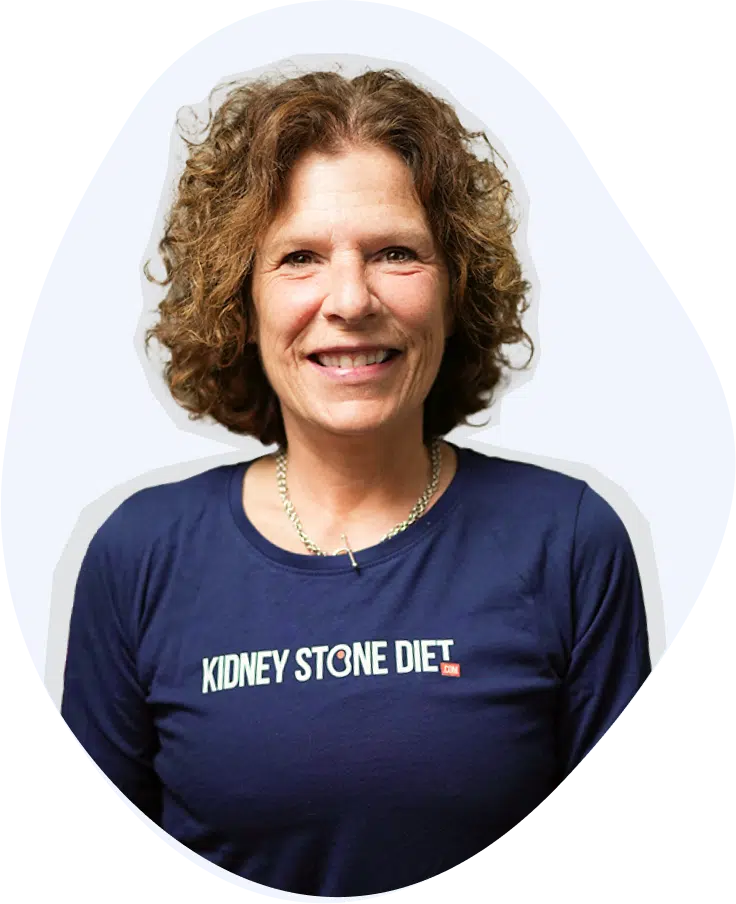
In this episode of the Kidney Stone Diet Podcast we learn about Jill Harris, how she became the Kidney Stone Prevention Expert, and how she helps people reduce their risk of kidney stones through the Kidney Stone Diet.
Kidney Stone Diet
Kidney Stone Prevention Program
Low Oxalate Food List
Subscribe to the Kidney Stone Diet podcast on Apple Podcasts, Spotify, or wherever you listen to podcasts.
00:00 Introduction
00:32 Who is Jill Harris?
04:25 How Jill stays so excited about the Kidney Stone Diet
07:02 Who is Dr. Fred Coe?
09:56 What is the Kidney Stone Prevention Course?
11:37 How Jill keeps patients on track
15:37 Jill’s battle with stage 4 rectal cancer
Find the transcript at BYLT.co/kidney-stone-expert
How Jill Harris became the Kidney Stone Prevention Expert
Jeff Sarris
Host
Jill Harris
Host
Chapters
- 00:00:00 Introduction to the Kidney Stone Diet
- 00:01:34 Patient Care at Litholink Laboratory
- 00:04:25 Patient Anxiety and Personalized Dietary Coaching
- 00:07:03 Kidney Stone Research at University of Chicago
- 00:09:56 Kidney Stone Prevention Course and Group Coaching
- 00:14:01 Maintaining Accountability in Lifestyle Changes
- 00:15:58 Overcoming Stage 4 Rectal Cancer Diagnosis
- 00:21:09 Community Support and Free Educational Resources
Free download
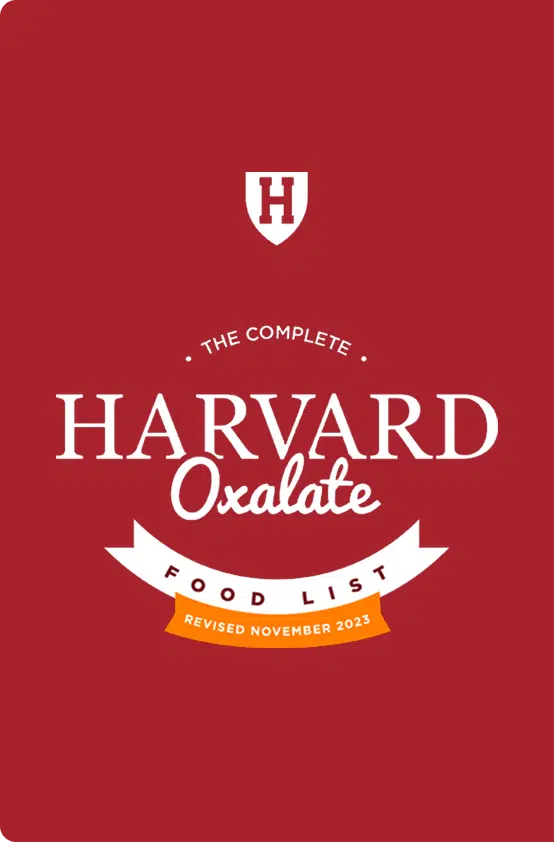
Download Your Oxalate Food List for Free!
Get your FREE copy of our Harvard Oxalate List (2nd Edition) as well as the Original Harvard Oxalate List.
Also see our Searchable Oxalate List that you can use right on your phone.
You’ll also get my Saturday email about preventing stones. Unsubscribe anytime with one click.
Want to know what to eat every week? All Access is a new Kidney Stone Diet® meal plan every week, my video course (a $249 value) and group calls with me, all for $48/mo, or try a week for $24. Cancel anytime.
Transcript
Introduction to the Kidney Stone Diet
00:00:00 Jeff Sarris
Inspire.
So, welcome to the Kidney Stone Diet, a show about reducing your kidney stone risk and living your best life. I'm your host and fellow student, Jeff Sarris, and I am here with the kidney stone prevention expert, Jill Harris. So, Jill,
00:00:27 Jill Harris
How are you doing today? Jeff, I'm so happy to be here. I can barely sit in my chair.
Hi!
00:00:33 Jeff Sarris
Yeah, it's good to see you. So, let's just dive right in. Who is Jill, and how did you become the kidney stone prevention expert?
00:00:41 Jill Harris
Right. Why should you trust this middle-aged broad sitting here with her curly, fuzzy hair? Well, I will tell you.
Let's see. I started this journey right about 1998, 1999, about 21 years ago, and I was working at University of Chicago, and I, honestly, came out of nursing school thinking that I would be like, patting heads, and holding hands, and telling people it's going to be okay, and being right by their bedside. And that wasn't the case.
It's very stressful working in a hospital, and to all my brothers and sisters that are nurses in a hospital setting, boy, you're pretty amazing. So, after two years of doing that, I got recruited to work at a laboratory called Litholink, and they did 24-hour urine collections, and it was founded by Dr. Fred Coe,
Patient Care at Litholink Laboratory
00:01:34 Jill Harris
And he also became my mentor. So, I worked there for many years, and while I was working there, I started Doctors started sending patients to me through the phone. Patients would get their urine collections done, and then they would go back to their doctors and say, "Here's my results, doc, what do I do?" And the doctor would give them a treatment plan, and then the patient would say, "Well, what does that What is a low oxalate diet?" or "How do I lower my sodium?" And so, the doctor would say, "You know, there's a nurse at Litholink, why don't you call her?" And so, it started like that a couple decades ago, and Dr.
Coe, like I said, was my mentor, and I ran the customer service team, but that also became a pretty big job of mine, taking care of all the patients there, through the phone. So, I'd get a call from a New York patient, then I'd be on the phone with somebody from California, and managing all these different personalities just by a phone call.
But, I loved it, and one of the reasons I loved it so much, well, there's a couple, you know, kidney stone patients tend not to get the help they need. So, you know, that is extremely important to me, to make sure they get the help they need, and to put it in bite-size pieces so people can understand exactly what they're supposed to do to prevent kidney stones.
And the other thing is I've been passionate about nutrition my whole entire life. Nothing makes me happier. And so, not only, you know, one of the best things about the Kidney Stone Diet is it's all encompassing, you know.
So, that really engaged me, too. So, after I left Litholink, I was there for about 12 years. LabCorp bought it out.
Dr. Coe sold it. And so, I just There was There was nobody to still take care of these patients.
And people from Litholink, the people that still work there, would re- They would say, you know, "My doctor said to call the nurse over here," and then they would say, "Well, that nurse left, but she's working from home and doing this at home. So, you can call her in her office at home." And so, then it just started going like that.
And, you know, doctors from Duke, doctors from NYU, doctors from University of California San Francisco, Mayo Clinic, people from all over, just it got word and doctors would send their patients to me. So, because, you know, doctors don't have time to talk to patients about nutrition, nor do they have the education to do that.
So, here you go. And so, that's how this was born, and I've been doing it for a really long time. And I talk to patients today, just as I did 21 years ago, with the same passion, the same compassion, the same empathy.
I love it. I love what I do.
Patient Anxiety and Personalized Dietary Coaching
00:04:25 Jeff Sarris
Yeah. How do you How do you keep that excitement then, over all these years, over all these calls, all these patients?
00:04:33 Jill Harris
Yeah. You know, I've dealt with thousands, and thousands, and thousands of people, and there are some days I'm like, phew, there's a lot of patients I'm doing today. But you know, every time I get on the phone, here's what I hear.
I hear a heart that is scared, anxious. They've had numerous stones, they've now lost their kidney, they have one kidney left, they have kid- chronic kidney disease, or they have diabetes and they're managing stones, they have bowel disease and they're managing stones, they got a gastric bypass, now they're doing stones.
So, I get to hear people's stories every single day, and it's those stories that make me continue to be so passionate about what I do. So, I'm listening to people say, "I'm scared. I'm afraid.
I'm really sick now, and I want to do everything I can to prevent these things, and also, I'm not getting the help I need to do it." And so, you know, that's exactly why I became a nurse. So, I get to do exactly what I want to do. And so, I, and I love talking about diets.
And not only that, but, okay, you could tell somebody low salt, but what the hell does that mean? How do you do that? What happens if someone's a pilot and they are in and out of airports all day long, and a doctor's saying, "You're going to have to cook your meals at home." How do you really help people make lifestyle changes for the long haul, not for 6 months, and then they're back in the same position again, but for the long haul and specific to them?
So, I guess one of the reasons why I stay so passionate, is I'm talking to different people all day long. Nobody's alike. They don't have the same medical conditions, they all have different stories, so it's my job to put their treatment plan that has been based upon what their doctor has told them into place specific for them, their medical conditions, their allergies, and their lifestyle.
That's not easy to do, but I love it. So, it's like dealing with a bunch of little puzzles for each certain person, and it makes me very happy. I'm a I'm a nerd, what can I tell you?
00:06:44 Jeff Sarris
Yeah, and I mean, you're a problem solver, and at your core, you're solving all of these really dramatic problems and issues that people are dealing with, but you're able to do it on a one-on-one basis and even a one-to-many basis through the Kidney Stone Diet, through your website.
00:07:01 Jill Harris
Yes, yes.
Kidney Stone Research at University of Chicago
00:07:03 Jeff Sarris
So, just to rewind just a little bit, tell me a little more about your work with Dr. Coe and exactly who Dr. Coe is.
He's at University of Chicago, and a nephrologist, correct?
00:07:13 Jill Harris
Dr. Coe is a world-famous nephrologist from University of Chicago. He has been there for decades and decades and decades, and if you searched his name, if you Googled him, you would find, you know, he's done all the papers, he's he's a scientist, and he's like the granddaddy, you know, I don't know if he likes it if I say that, but he's the granddaddy of kidney stone prevention.
So, he has spent his entire career doing science-based medicine, telling the world, "Look, these things can be prevented. Up to 80% of kidney stones can actually be prevented with the right lifestyle changes, and also sometimes medications." So, meds are here, meds can also be used, but typically the meds don't even work that well unless there's lifestyle changes.
So, you never get rid of the lifestyle change part. But, Dr. Coe, I mean, look, I wouldn't have the career I have if it weren't for Dr.
Coe. He, and that's C-O-E, in case you do want to Google him, Fred Coe. He really took me under his wing, and he, even though I talk in a very down-home kind of way, everything I talk about is drenched in science on his website, which can be found at kidneystone.uchicago.edu.
You can also find me on that website, too. So, we're a very interesting pair because he, again, is very scientific, and I am who I am. So, what we do so great together is he has taught me all the science behind the diets, but, you know, I'm really good at bringing home these windy, lofty subjects to doable lifestyle changes for patients.
So, you can talk to a patient like, you know, the New England Journal of Medicine science-based research, but they're never going to understand what the heck you're talking about. And in order to get real change from people, it has to be attainable for them and it and the education has to be brought to them in a way that each and every person can understand.
So, Dr. Coe is the brain behind all things kidney stone prevention. So, and if you go on his website, be prepared, he's he's just He truly is a genius, and he's amazing, and so everything he talks about is all science, and you know, like I said, he's taught me everything I know, and I'd not be half the person I am in the kidney stone industry without him.
I can assure you that's true.
Kidney Stone Prevention Course and Group Coaching
00:09:56 Jeff Sarris
Yeah, and I love how you then condense all of that very dense information down to be consumable. I mean, that is that in itself is a huge a huge offering that you have, but on top of that, too, then you have sort of coined the term Kidney Stone Diet. You've created this entire program and course around improving someone's health, but also reducing the risk for kidney stones.
Let's talk a little bit about what's in the course and what people could expect.
00:10:30 Jill Harris
Well, the Kidney Stone Prevention Course, actually, was something Dr. Coe said, "You must do." so, what the Kidney Stone Prevention Course is, is it's a series of videos, and they're each broken down into the Kidney Stone Diet with a couple extras. The first video you would get, it's a little over 4 hours worth of videos of me teaching you what exactly the Kidney Stone Diet is and how to implement it.
It also talks about testing, and so many patients never get testing ordered to figure out why they're forming stones. And so, these videos, you get lifetime access to. They're also fun, too.
I'm not going to make it if, you know, you know me for 5 minutes, they're not going to be dry and sciencey, they're going to be very doable goals for you to attain. So, you get that. You'll always have lifetime access to those videos.
Many of my patients say they go over them over and over. They fall off the wagon with their lifestyle changes and they're like, "Oh, let me go back to that video and see what she said. I forgot." So, they use them over and over.
But I think the real the best part of the Kidney Stone Prevention Course is that you get to work with me for an entire month, Monday through Friday. I have office hours each day, and two of those days during the week are nighttime calls, and they're very busy. They're great.
It's a group call where everybody gets on and everybody gets to ask me the questions based upon, you know, low salt. What does that mean for you? What other medical conditions you have?
And so, you'll get very specific help in figuring out how to make the lifestyle changes. It's not only just to learn how to do it specifically for you, we have a great time, you learn a lot from other patients, you get to see that you're not alone, and it's a way in which to keep accountable. How many times have patients or people, all of us are people, too, how many times have has one started a diet, did a great job, lost their 25 lb, and then gained 30 back some months later?
So, it's a great way to stay accountable. A lot of people keep enrolled in it, and it's only $19 a month to do that. It's really cheap for the 5 days a week.
And you get to, you know, come in even if you don't say anything. A lot of people just use it to hear me, you know, keep them accountable. And, you know, I love motivating people.
I'm a coach, I'm a health coach, too. So, I really, really enjoy motivating people. So, even though the videos are great, I mean, that's where you're going to learn everything, the daily office hours that you come in and out of, maybe you only come once a week or whatever, maybe you only came once a month, maybe a lot of people come every day because they like to get a kick in the tush from me, you know, and keep motivated and talk about what they're going through, because listen, if lifestyle changes were easy, nobody would be overweight, and our country is getting larger and larger, and with those obesity rates increasing, we get more diabetes, cardiovascular disease, you name it.
So, we've really These are It's not just kidney stone prevention you're going to learn here. You're going to learn how to lose weight, you're going to learn how to keep it off, you're going to learn how to eat healthy for you, based upon what you have going on, not Pam, not Tammy, not Clyde, you. That's why it's so great.
And nobody does this! So, you know, I love it.
Maintaining Accountability in Lifestyle Changes
00:14:01 Jeff Sarris
Yeah, I think accountability is highly underrated because it's so hard to have that intrinsic motivation just on our own without someone there in our corner supporting us and really helping us along the journey.
00:14:16 Jill Harris
It is very difficult to do by yourself. Look, again, if one could do it by themselves, then we wouldn't have the obesity problems we have, I mean, we just wouldn't. So, and we've got to be honest.
And one of my jobs, too, is always to push back a little. "I hear you, Tammy, it's hard right now with COVID and this, and that, and this, but, look, I got the same things you do, could be a little bit more, a little bit less. I'm an old lady.
It's not like I'm 20, and I'm pushing through every day. So, I also have medical conditions that I deal with, so I get it, I hear you, I know it's annoying to cook, but, look, at some point in your life, and you'll hear me say this throughout, throughout, throughout, you got two choices: unhealthy or healthy. Do you want to live your best life?
The only way you can enjoy your life is if you feel good, emotionally and physically. Lots of times when we don't feel good physically, it's a all catch-22. Maybe our mind isn't doing well, so we eat poorly.
Maybe we're eating poorly, and then that causes our mind and emotional state to dip. I mean, this all goes hand in hand. Without your health, we all know this, but, honestly, people, without your health, what do you have?
And I've been sick in my life, so I understand, and, you know, it's scary when you're sick. And every stone former that comes to me, they're scared. They're afraid.
They're anxious. So, not only were they sick, but now they don't know how to make sure they don't get sick again. So, it's very important to take these lifestyle changes seriously, no matter what you're combating, you know what you're combating at the moment.
Overcoming Stage 4 Rectal Cancer Diagnosis
00:15:58 Jeff Sarris
Yeah, and not to dive too deep, but do you want to share a little bit about your health and what you've dealt with?
00:16:04 Jill Harris
Absolutely. I love sharing my story. Number one, because people are like, "Oh, she's pretty fit for an old broad.
Look at how lucky she is. She's probably never known what it is to be sick." Well, I have stage 4 rectal cancer. Not a pretty one, I know.
State in 2015, I was diagnosed with rectal cancer and with, I mean, I had chemo and radiation, and I've had half of my colon removed, I had an ileostomy for a time, which is definitely a precursor for stones, went through all that, more chemo, couple months after that, so that was like end of 2015, came back to my liver, three spots.
And so, at the end of 2015, I had a liver resection, was shipped off to Sloan Kettering. I'm in Chicago, I had my care here, but, you know, when you get stage 4 cancer, you get other, you know, doctors involved, and so I was shipped off to Sloan Kettering. I had a liver resection there, I have a pump inside my body that they put chemo through.
It was cutting edge cutting edge stuff they were doing. And so, I have an oncologist here in Chicago and an oncologist in Sloan Kettering, and so I've had my bouts with stuff, I will tell you. And so, I've been in remission for the last nearly 4 years, which is pretty remarkable.
And I understand what it's like to be sick, and so when I became sick, you know, I'm sitting around being sick, and, you know, it there's so much I learned. So, I'm the kind of person, too, that, you know, I can sit here and go, "Boy, this sucks being sick," and it did, or I can say, "Okay, what can I do? What can I do right now?
I can't work out. How can I continue to make a difference?" Because, really, honestly, that's why I'm here. I know this sounds hokey, believe me, I know what I sound like.
I know it sounds whatever, girl. But the reason I'm here is to make people feel better, whether it's to motivate somebody or to make them feel a little bit special or, you know, it's really my one-trick pony. I don't got a lot.
I'm a pretty good mother, great friend, I think, good family member, but other than that, I'm just people stuff. Other than that, math and everything else, Jeff, you know me, technology, I don't know, but this stuff, I'm good at. So, when I was sitting at home, I'm like, "You know, let me go on Facebook and see who's doing what with kidney stones." I saw a couple Facebook pages.
I thought they were kind of negative. So, I'm like, "You know what? I could sit here in my bed being sick, I could open up a Facebook page." And I did, and it's called the Kidney Stone Prevention Diet.
And so, I opened up that page and things just started coming alive on that page, and there was a lot of people that were starting to find help, right? And so, I give away all kinds of free stuff on Facebook because sometimes people can't afford my services even though they're super cheap, but I wanted also to have a platform where everybody could get help, and so I'll go on there and do Facebook Lives.
I love doing it, and it's a great support platform for people. And so, the other thing about being sick that I learned is, I've always have had a lot of compassion for what I do, but, boy, when you're sick and you go in a doctor's office, and here's the thing, people are like, "Well, you got cancer, so what? You'll at least you're a nurse, you know what to do." yeah, I've done kidney stones.
It's not like you ask the plumber to fix the lights, we do what we do. So, I don't know nothing about cancer. So now, not only do I have stage 4 cancer and all these surgeries and all this terrible stuff, but I'm in doctors' offices flying back and forth to New York and dealing with all this to get my care while I'm on chemo, and I go in a doctor's office and they're so busy and so in and out, you don't You're so scared, you don't even know what you don't know, so you don't know the questions to ask until you've already left the office.
And so, I wanted to I wanted to build a platform where patients could get educated, whether on Facebook, or at the Kidney Stone Prevention Course, or at my website at kidneystonediet.com, where they could get educated so when they do have a doctor's appointment, they know what to expect, they know how to navigate that doctor's appointment, they know what test to ask for, because we need to get the help we need and our healthcare system is not set up, we don't have 15, 20, 30 minutes, 40 minutes, an hour with the doctor, so we've got to really be prepared.
So, me being sick opened my eyes even more to what the heck was going on. So, I get to put all that into my into my practice, too. So, it even makes me even happier.
So, I couldn't be any happier, so. I don't know if I answered your question, but there you go.
Community Support and Free Educational Resources
00:21:09 Jeff Sarris
Oh, absolutely. I mean, you wonderfully illustrated, I mean, this is this is who you are. This is your life.
This you're so giving. You're giving your life to so many people to really help them overcome what they're dealing with. And just along those lines of having the Facebook group and things for people who maybe they're not going to buy the course, but they need help, that's the same reason we're doing this podcast, the same reason we're going to release it on YouTube.
Really, this is going to break down everything about kidney stones, everything about prevention and lifestyle, and over the course of many episodes, we're going to dive into the nitty-gritty, all the all the details of what it looks like to do this for those of you who maybe aren't going to be able to dive into the course right away, but, yeah.
00:21:56 Jill Harris
Right. Yeah, and you know, you can tell by my cheeks, I get very excited. I really do.
I get hot under the collar. Did I mention I'm also going to be 57, so you're going to see a lot of red cheeks throughout? But that's okay, because my demographic typically is right around my age, so that they all understand.
00:22:13 Jeff Sarris
Oh, yeah. So, I think this was a great a great inter- episode, getting to know who you are and what's to come from this podcast, and if anyone wants to dive deeper, they can go to kidneystonediet.com, learn everything about more about Jill, more about the Kidney Stone Diet, and check out the course. So, this has been great.
I think we will end right here. And next week, I'm thinking we're going to dive into let's see what's on the what's on the slate, we're going to dive into the causes of kidney stones next time. So, be sure to subscribe to this podcast if you enjoyed it.
It's on Apple Podcasts, Spotify, wherever listening right now, and also, you can check it out on YouTube at Kidney Stone Diet. So, again, thanks, Jill, and we will talk again next time.
00:22:59 Jill Harris
I'm super excited, Jeff. Thank you so much. I hope you have a great day.
00:23:03 Jeff Sarris
Oh, yeah, you too. See ya.
00:23:04 Jill Harris
I will, bye.