Transcript
Quinoa Oxalate Content and Kidney Stone Safety
00:00:00 Jeff Sarris
You love quinoa, but you also make kidney stones. So today, the question is how much oxalate is in quinoa?
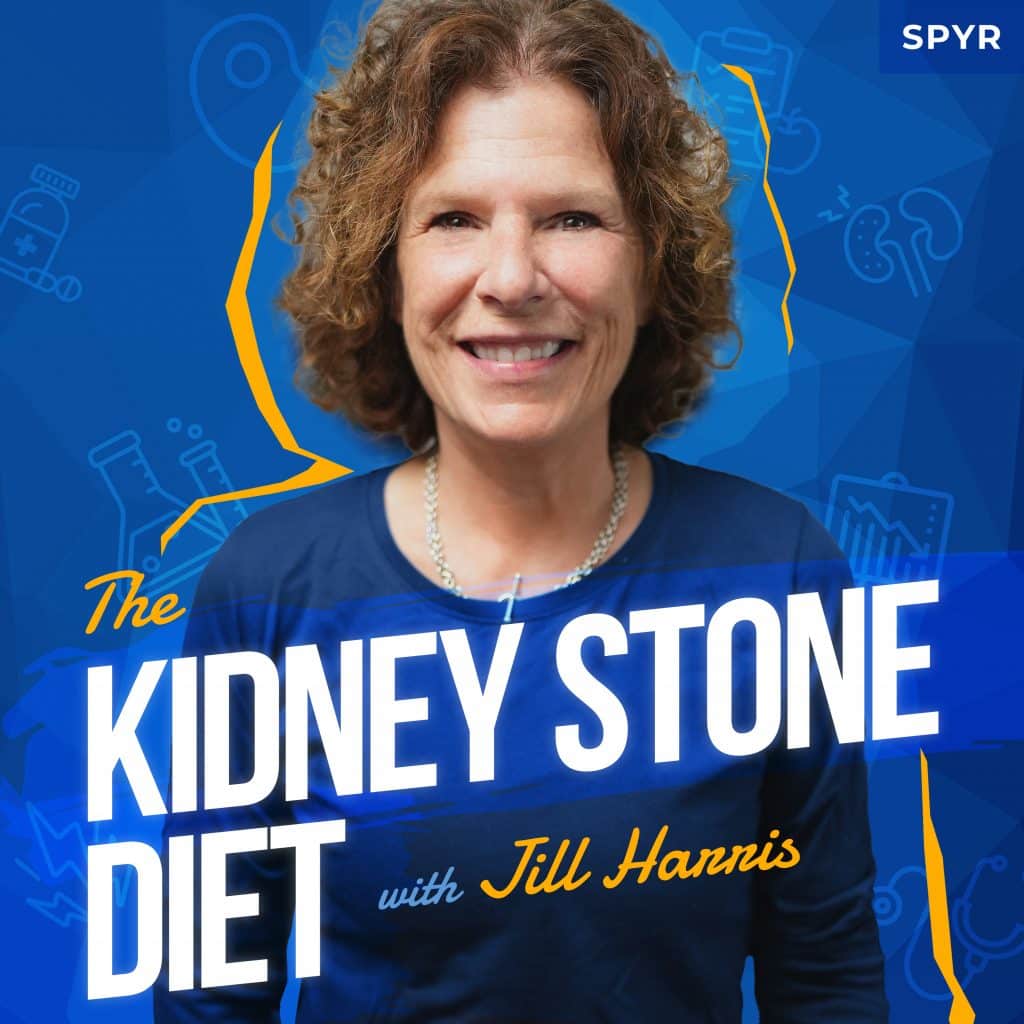
Welcome back to the Kidney Stone Diet podcast, the show about reducing your kidney stone risk and living your best life. I'm your host and fellow student, Jeff Sarris.
And I'm Jill Harris, your kidney stone prevention nurse.
Yeah, so today we are talking about quinoa, which is a fairly common question for kidney stones, oxalate, and sort of determining, are they safe for kidney stone formers?
Portion Control and Calcium for High Oxalate Foods
Yeah, I love I love this question. I love quinoa. Here's the thing: quinoa is a really good grain for vegans who are trying to get protein, you know?
So, and a lot of my vegans and vegetarians that come to me, they're like, "Oh, Jill, I used to eat so much quinoa. I'm not going near it now." And then they're kind of shocked when they hear me say, "It's not like you can't have it, Sally." So, quinoa is 54 mg for a cup of oxalate. So, yeah, it's high.
It's on the higher side for sure. Most of you, unless a doctor has told you otherwise, get 100 mg of oxalate a day. So, half of that's going to be taken away if you have a cup of quinoa.
So, you have a decision to make, folks. And I tell all my patients that come to me for a consult, you get 100 mg, unless you're a bariatric patient or somebody with malabsorption issues, you will have less oxalate, and typically it's 50. There's many patients that are being told 50 and they don't have any other medical conditions.
That's much too low. "Well, Jill, it should be as low as possible." No, because you're taking away too many fruits and vegetables, folks. And what do I have?
I have people eating a shitload of white rice all the time, which is nothing except carbs, straight carbs, right? So, that's not good. So, you need your fruits and vegetables and, absolutely, healthy grains.
I don't have any problem with white rice, guys, but you're from I'm telling you what I hear every day, "Jill, I'm eating so much rice cuz I know it's safe." And they're doing that because they've had such a horrible experience with kidney stones, so I get it, but don't do it, okay? So, even though we have some of these grains that are higher, you know what I'm going to say, portion, not perfection.
You don't have to have a whole cup of quinoa. Have half a cup. That's only 25 mg of oxalate.
You still got 75 left. The other thing I'm going to tell you is pair that with a calcium source. So, I do eat quinoa, and I always have my whatever, if I'm having a dairy calcium source, I'll have a lactose-free dairy calcium source, or sometimes I have a non-dairy calcium source, like pea milk cuz it has 8 g of protein still.
So, so, definitely, for vegans and vegetarians, quinoa will have fiber and it will have protein, and so it's a very healthy grain. It's not something, though, that you should have as a staple with every meal. And a lot of kidney stone formers, especially non-meat eaters, were trying to get their protein needs met through all these grains, and so or beans, legumes, and so they overate those things to get their protein needs met.
And so when we do that along with not getting any calcium needs met, which is so very common for every patient I've ever worked with, until they got a kidney stone or bone disease, nobody was getting enough calcium. It's not on anybody's radar until something happens. So, the combination of eating, you know, quinoa bowls every night along with not getting any calcium, is definitely going to be a problem.
Bean bowls every night without getting enough calcium, day in and day out, year after year, that will make a kidney stone. So, I always say this, honestly, I mean, there's rhubarb, there's chia seeds, there's spinach and almond products, cashews, I mean, it's just a handful of foods that I say really don't eat anymore. Otherwise, things like quinoa may be a little higher, but watch, the dose always makes the poison.
So, the portion will make the poison in this case. Have a lower have a lower amount of the quinoa. When I have First of all, when I have No one asked, Jill, I'm telling you anyway.
When I have any grain, it's typically half a cup. Half a cup. Because, two, there's everybody has different reasons for what they do, but, typically, half a cup, maybe 3/4 of a cup for a portion of a grain, okay?
And a lot of vegetables in there. So, when I'm having a grain, because I do a lower-carb diet, and when I do carbs, typically, I am looking for carbs that contain protein and fiber to keep me full. It doesn't mean I don't have white rice sometimes, I certainly do because I just want it emotionally.
It's very soothing, comforting food, white rice. And I and there's no harm in it. Obviously, if you're a diabetic or whatever, you have to watch your carbs, but I'm just saying, so, of course, have white rice if you like that.
But, typically, when I'm having any kind of grain, I keep it to half a cup, and then it's just it's just like it's not the anchor of my bowl. Vegetables are always my anchor, with a little bit of bips and boops like quinoa, something like that, or lentils. I'm not having a whole cup of lentils, I'm having half a cup.
You all have your medical conditions and the goals and all the things. You have your kidney stone diet goals, and then you have other medical conditions that you like being a diabetic, watching carbs. So, everybody has different things they're trying to accomplish with their diet.
That's why the Kidney Stone Diet is a set of goals, not "you can't have this, you can't have this" kind of thing, because we're all very different. So, for me, a lower-carb diet works. For Jeff, a lower-carb diet works for him.
W- What are you doing these days? Are you doing Are you just calling it a lower carb? It used to be paleo many moons ago with some white rice.
What do you do?
Low Carb Habits and Sustainable Dietary Goals
Yeah, yeah, definitely low carb. It's I wouldn't say I'm as regimented in tracking as I once was, like at the beginning, you know, you really get into it so much more and you're really paying attention, sort of, where am I where am I at today, where am I at yesterday, where was I yesterday. But then it just becomes your lifestyle.
So, that was always the thing early on, I'm like we have a diet, and the term diet tends to be on again, off again, but then we have our diet, and our diet is just the diet that we eat. It's not really thinking about it as a diet, so it just becomes part of our lifestyle. And, yeah, really that's me, it's just integrated.
And, sort of on that note, people do ask you all the time, like, "Well, what do you eat?" And I think that's sort of a really great example is to look right at the meal plans. Like, people can go to kidneystonediet.com and see the meal plans and see exactly the kinds of things that Jill, it's all the recipes you created in your kitchen from scratch, but integrating things like quinoa, and things that maybe people wouldn't expect because they aren't ultra-low in oxalate.
Reintroducing Oxalate Foods Through Healthy Meal Plans
Well, that's one of my greatest joys. When I'm making recipes, I'm like, "Oh, I'm going to put quinoa in here and really freak the meal plan subscribers out." But always in my notes, I'll say, "Yes, I used quinoa, notice the portion, divided by four, you don't have a lot of oxalate here." And so it teaches people The meal plan is great cause you can see what I'm eating and you're going to love all the food, too.
Don't think there's not things like Big Mac in a bowl, cause ol' girl here needs some fun foods, too. But it's all low-salt, no added sugar, you can't beat it. It's ways to do it, but still keep your mind happy, but also keep your body happy, and that's how I approach in my kitchen.
But one of the best things about the meal plan for me when I'm writing it all up is I get to put the Kidney Stone Diet notes in there. I tell people why I did what I did, notice that I incorporated this, and this is probably something you've taken out of your diet, like black beans, and you can absolutely still eat them, you know?
So, the notes of the meal plan helps people understand why I did what I did, and please start using some of these foods cause you're missing out on a lot of health benefits of them, right? And so I think once people make kidney stones, they just This is what I hear every day, and this is why Jeff kept saying, "Do the meal plan," because what we hear every day at Kidney Stone Diet is "there's nothing to eat." Because if you go on the internet, they're going to say, "Don't eat this, don't eat that, don't eat that." It's not true, folks.
And people will when they first meet me and we're doing a consult, they're like, "Oh, you're making me nervous thinking I can have all these foods." But you've got to recognize for 26 years I've been looking at follow-up urine collections where I've told people when they first come to me I'm looking at their first urine collection I'm like, "Listen, Karen, do all these things I'm saying, and it may make you a little nervous, but you're going to do the follow-up in a couple months.
And definitely incorporate beans, do some quinoa, do the higher oxalate foods, but get your calcium needs met every day on the but and on when you're doing the follow-up urine collection, do all that and get your calcium needs met so you can see your oxalate's still going to be low." I get the call. We do the follow-up, she's like, "Holy preshoals, Jill!
You were right! Look at my oxalate, still under 30! And I had black beans!" The main difference is I started using calcium now, by food or drink, not pills.
"And now look, I get it, I get it!" And there's such a sense of freedom and joy, and, you know, you just feel so chained and just imprisoned by all these dietary restrictions. Forget about kidney stones, if you're a diabetic, or you have PCOS, or you have this or that, and now you're FODMAP and gluten-free and dairy-free, oh my god, you're just thrown all these things you don't know anything, and it's so overwhelming.
So, mostly my job is bringing foods back. And so the meal plan is a tangible source of seeing there's there's plenty to eat, and it's and it doesn't have to be not good, it's all good. You think I'm eating bad food or Jill People say, "Jill, I want your muscles.
What do you eat?" Get the meal plan! There's protein, there's fiber in every meal, so you're not starving for the next meal. I'm always full!
Cause part of my plate is always going to be the main thing is protein and fiber, a little bit of carbs, if I have carbs that day, it's a half a cup, or there ain't no carbs. But in the meal plan, of course, not everybody eats as strictly as I do, so, of course, there's carbs in there. There's, you know, there's something for everybody in the meal plan, whether you're a vegan, vegetarian, gluten-free, keto, I have keto dishes, I have all kinds of things in there, because I like to consider myself, more than anything, a flexitarian.
I if I want a sandwich, even though I'm low carb, I'm going to have a damn sandwich. Maybe I'm having one piece of bread, like sourdough bread and cutting it in half and that's going to be my sandwich instead of two pieces, but sometimes a girl needs a sandwich simply because it's practical. Right?
I ate so many glad lettuce wraps. So, I'm more of a flexitarian. Typically, I'm low carb, but if I want a sandwich, I'm not that strict.
I also eat what I feel like having and it's always going to be about portion. So, quinoa, it's 54 mg a cup, have half a cup, 25 mg, and get on with your day. It's a nice, healthy, higher protein, high fiber grain.
Yeah, and like you said, there's so many inputs we can follow: keto, gluten-free, this, that, and the other. But this is what you do at kidneystonediet.com is you simplify and give the lane that people can follow to know that they're reducing their risk for kidney stone. So, if you want to dive in and you want to just simplify your diet and live a better life, go to kidneystonediet.com where you can find everything.
And if you enjoyed this video, YouTube thinks you'll like a video that's on the screen right now. If you're listening on audio, share this episode with a friend, and we'll see you next week.