Transcript
Gluten-Free Diet Misconceptions and Kidney Stone Risk
00:00:00 Jeff Sarris
Gluten-free diets are so popular, but don't start a gluten-free diet until you hear this.
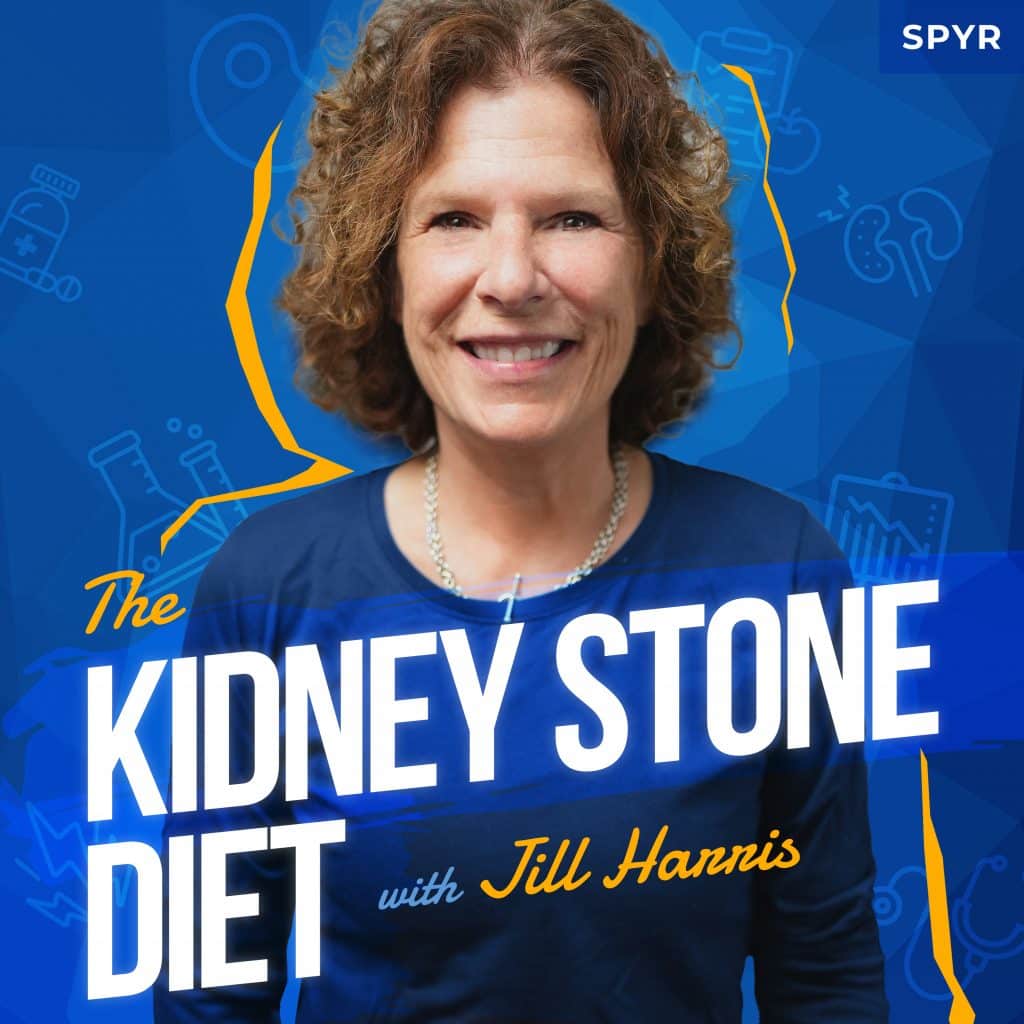
Welcome to the Kidney Stone Diet Podcast. The show about reduce diet reduce your kidney stone risk and living your best life. I'm your host and fellow student Jeff Sarris.
I am a… There's a few episodes today, so…
It's hard when you're taping a lot to stay fresh, that's for sure!
And I am Jill Harris, your kidney stone prevention nurse. There you go!
Yeah, so despite this, what are we? 228 episodes in. We have a whole backlog of everything.
Jill has 25-26 years…
Yeah, it's so many episodes!
I think we've done like 270 something, no?
So, I think we are at 228. At least, that's what I have on my little notes here, but either way, that is so many. And Jill has 25, 26 years of kidney stone prevention experience.
So, if you're new here, welcome! And why don't we dive in because gluten-free, that is something that people need to talk about when it comes to kidney stones, what we do here.
Yes. So, people who has who has who have celiac disease are often told to do a gluten-free diet. There's a lot of people that are misdiagnosed and they are said to have celiac and they don't.
So, you know, beyond celiac.org says an estimated one in 133 Americans or about 1% of the population has celiac disease. However, recent screening studies point to maybe even a little higher than the 1%. Now, so my point is this: I have a lot of people doing gluten-free just because they think that's just healthier to be gluten-free.
So, a lot of people I'll ask them, "Do you have celiac?" "No." "But it's a healthy diet." So, there's also a lot of misconceptions about gluten-free diets. They're not necessarily healthier diets. They can be very helpful for people who have celiac disease, for sure.
But a lot of people who are doing gluten-free do not have any kind of medical condition that warrants them to be gluten-free. So, why do we care about gluten-free diets in the kidney stone world? Well, when you are gluten-free, you are using flours that are not wheat-based, typically, so it's not so you're not eating wheat and have GI upset because of that or flare ups.
So, you're eating almond flour, number one thing, lots and lots of almond products. Because that works for baking and for breads, stuff like that. So, you know, people don't want to give up flour in general, and we do have a YouTube video about gluten-free flours.
So, a lot of patients who have formed kidney stones, it's because they were overusing almond flour. So common!
Yeah, and in case someone doesn't know, too, yeah, how does that play into it?
Almond Oxalates and Sodium in Gluten-Free Products
Yes. When we eat, almonds are very high in oxalate. So, they're so high in oxalate that I do take them away, because who the hell has ever said, "Honey, go get a go get the bag of…
Oh, you know what? Just get me one almond." No one ever does that. You want some almonds, if you're going to go get some almonds, you want a few handfuls of them.
Otherwise, there's no point in bringing them to the couch. So, almonds are very high in oxalate. And when we have really high oxalate foods over and over and over, along with not getting any calcium in our diet, we can get kidney stones from that.
So, a lot of celiac or gluten-free, sorry, a lot of gluten-free people are overeating high-oxalate foods. That's one thing. The other thing: when you're buying gluten-free, I'm going to use bread as an example.
When you're buying gluten-free products like bread, they're taking the gluten out of the product. Gluten makes bread chewy, gives a nice consistency, and people really like that. Once you take gluten out, stuff, food, food starts tasting like cardboard, okay?
So, they want to doctor up the taste and feel from these products that the gluten has been removed from with things like more sugar and more salt. So, when you're getting your special gluten-free bread at the grocery store, please pay attention and see how much sodium is in each slice. Because too much sodium, also added sugar, too much added sugar and too much sodium can make you have can pull calcium from your bone and dump it into the urine, and this is another kidney stone risk.
So, many patients will say, "Jill, I'm eating healthy, I'm gluten-free." And I'll say, "Go get your bread. Go get your bread, Polly. Get it out.
Okay, I got it out. Turn it around, Busta Brown, look at the nutrition label. What, Jill, what?" Look at the sodium.
Oh my god, there's 250 mg of sodium in one slice of bread. "And I'm having a sandwich, Jill, and also I'm having toast for breakfast." So, he's eating hundreds of milligrams of sodium just in four pieces of bread a day. Forget about sodium in everything else.
And remember, too much sodium can pull calcium from your bone and dump it into your urine. Also, too much sodium can lower urine volume. You feel bloated when you eat an out-to-eat meal?
That's because you're retaining water from all the sodium and added sugar you just had. So, in the simplest terms possible, when we eat too much sodium, as we do in gluten-free diets, many of you do, you will pee less, which can also increase your saturations, your urine saturations, and make you more prone to kidney stones.
Think about it: if you pee less, you're not constantly, on a regular basis, getting rid of all these crystals. Now, they're accumulating in the urine that you're holding in because you ate too much salt. And sugar actually works the same way.
When we eat too much added sugar, that also will lower urine volume. So, you pee less, and that's again why we're walking around so bloated. So, it's very important to know that a gluten-free diet doesn't mean you're eating healthy.
And many people are just going and have been on a gluten-free diet just because they think that's a healthier way to eat, without looking at nutrition labels, without even needing the products, cuz they don't have celiac disease. So, I want you to understand that gluten-free can, if you're not paying attention, can really increase your kidney stone risk.
So, it's super important. So, if you don't need to be gluten-free, don't. Watch your salt in any breads, by the way.
People will say, "Jill, what how should I choose bread?" I don't I want you to pay attention to the salt and added sugar in bread. I'd also like you to pay attention to the amount of fiber in your bread. Choose pieces of bread or slices of bread that have at least 3 grams of fiber in it.
That's awesome. And then people will say, "But watch the salt in it." And then also people will say, "Well, you know, wheat is high in oxalate. And that's also why I went gluten-free, Jill, because I figured I'll go wheat-free, because, you know, there's a lot of oxalate in wheat." Yeah, but Harvard, which is the oxalate list found on my website, a cup of wheat is high in oxalate.
There ain't a cup of wheat in a piece of bread, folks. So, get your mind around that, too. It's always about portion, not perfection.
It's not about you can't ever have wheat again. It's just, you know, you may not want to have two cups of wheat a day, which no one's doing. There's just a little bit of wheat in that slice of bread.
So, kind of all over the place, but the point is a gluten-free diet for any of you who just happened to click on this and you're just going gluten-free and don't even have a kidney stone doesn't mean it's the healthiest diet in the world. Choose gluten-free diet products that are lower in sodium, if you can find them. And also for kidney stone formers specifically, but for all of you, pay attention to all the sodium and added sugar that they're putting in these gluten-free products, and choose the gluten-free products, if you actually need that, that are lower in sodium.
Does that make sense, Jeff?
Oh, yeah, it absolutely does. Yeah, and like, you know, I've been gluten-free for a long time, but I'm not big on products. I'm very much about the outside of the store.
You have your meats and veggies and fruits. And I think that's also something to consider, too, if we're going gluten-free or even if it's just from a health perspective. Are we just sort of doing the cliché of the, what is it, Oreos and Doritos vegan?
Where it's like, "Oh, I went vegan and all I eat are vegan Doritos and vegan Oreos." Like that's not really any healthier, it's just a shift. So, the same thing applies to gluten-free is, are we merely doing this, but shifting everything to also foods that aren't sustaining for our, like for our health, for overall health and well-being?
Sugar and Sodium Additives in Processed Foods
I couldn't agree more. And it brings up the topic when we as consumers start buying stuff, don't think these food companies don't notice. "Hey, Henry, these folks in the grocery store, they're all doing keto." This is a few years ago.
People have slacked off on keto, which is fine by me because it can also bring on a lot of kidney stones, the way people are choosing to do it.
Have an episode on that, too.
Go Yeah, right. So, don't think that these go- the food companies don't notice. When keto went big, one thing it did teach us: get rid of sugar.
So, people started demanding products that had very, very low sugar. By the way, what'd they do with those products? They started up in the salt in those products, folks.
So, if you have a salt-free product, they're going to add sugar to it. If you have a sugar-free product, you can bet your sweet bippy there's more sodium because, remember, the food companies want us to like the product. So, if it's low sugar, they're going to add more salt because we'll like it better.
Salt is appealing to our tongue and our mouth, okay? So, when they take away something, they're adding in other things that are going to make us like it. Otherwise, everything starts tasting like notebook paper.
That's why they do that to the breads, cuz otherwise it is really like cardboard, those breads. But just because something is keto-friendly, gluten-free friendly, all these things, doesn't mean it's a healthy product. And Jeff's example of lots of vegans are obese simply because they're they're eating food that don't have animal products in it, but tons of calories, right?
There's all kinds of vegan products that are very caloric, very salty, all kinds of things. Doesn't mean it's healthy. And so food people, food companies know what we start buying, and then they start making tons of it.
And a lot of times these things aren't the best for us. Very true, right? So, you can be gluten-free and having a really terrible diet, folks, just so you know.
You can be keto, also, a lot of extra salt in those products. So, I'm just saying, and both of those diets specifically, keto and gluten, very high in the almond products, almond flour, almond milk, right? Low-carb diets, all almond, almond, almond.
And that's how people get their kidney stones. All those specialized diets makes the bulk of my practice, let's just say that, right?
Kidney Stone Prevention Resources and Support
Yeah, and if you want another video on the keto diet or other diets, leave a comment down below or go to the Facebook group and leave a public message there, the Kidney Stone Prevention Diet. And if you want to dive deep, kidneystonediet.com, you can find the All-Access Pass for everything Kidney Stone Diet related or right on that homepage, Jill breaks down all of the goals for the Kidney Stone Diet, absolutely for free, just to help as many people as she possibly can.
But I think with that, we will wrap. Thanks for tuning in, and we'll see you next time.